How to Moderate a Panel Discussion with Authority
You're already in the room, or you will be in an hour. The mic is live, the panelists are settling in, and one of them has already started answering before you've finished introducing the topic. That's the moment where panel moderation stops being a polite hosting job and becomes a real test of command, pace, and judgment.
What Separates a Strong Panel Moderator From a Weak One
The room usually gives the weak moderator away in the first minute. One panelist is halfway into a second story, another is trying to jump in, and the moderator is still scanning a printout, hoping the next question will somehow restore order. The audience notices that drift immediately.
A strong moderator looks different long before the conversation gets difficult. They sound prepared, they know where the session is going, and they're comfortable steering without making the panel feel stiff. That's the key to how to moderate a panel discussion with authority, not by sounding loud, but by sounding settled.
The three signals the audience trusts fast
The audience doesn't need a biography from the moderator. It needs three signals: clarity, control, and calm. Clarity means the moderator can state the purpose of the session in plain language. Control means questions move the room forward instead of getting buried under side stories. Calm means the moderator doesn't look surprised when the discussion wanders, because it will.
A weak moderator often tries to prove authority by talking more. That usually backfires. The stronger move is restraint. Short setup, direct questions, and quick transitions tell the room that someone is managing the experience.
Practical rule: the most prepared person in the room usually sounds the most senior, even when they're not the most senior person on stage.
That's why credibility matters before charisma. A moderator who can establish that early often feels more authoritative than a title-holder who arrived with no plan. If you want a useful parallel on presence and trust, this guide on building credibility as a leader makes the same point in a different setting, credibility is built through visible preparation and steady delivery.
The shift in mindset matters. Moderation isn't a loose interview. It's facilitation with a visible goal, a fixed rhythm, and someone actively protecting the audience's attention.
The Pre-Event Preparation Checklist
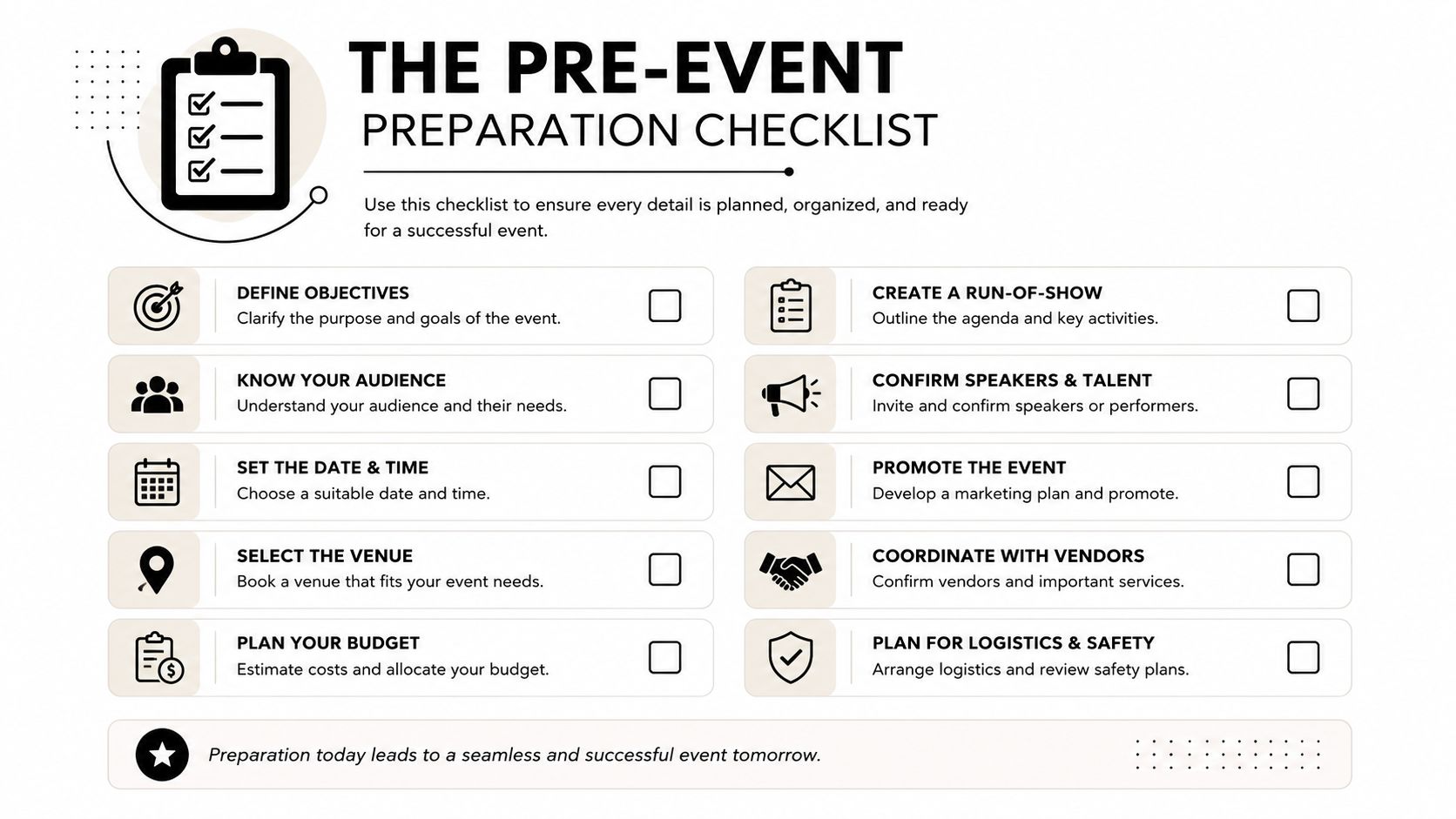
The strongest panels I've run never felt improvised, even when the conversation sounded effortless. By the time the audience arrived, the moderator had already done the quiet work, and that preparation showed up as a room that felt guided instead of unmanaged.
Build the question bank before you build the script
A useful planning standard is to prepare up to 10 questions in advance, make sure there is at least one for each panelist, and know the first question and last question before the session starts. That kind of preparation forces you to think in an arc instead of a list of disconnected prompts. A question bank should not be a pile of clever lines. It should move the room from context, to tension, to a clear takeaway. Toastmasters' panel moderator guidance is useful because it treats preparation as a disciplined process, not a stage trick.
The cleanest prep process starts a week out.
- Read every bio once, then summarize each person in one line. Long bios are for organizers, not for your live notes.
- Ask each panelist what they want to be known for. That keeps the discussion from circling familiar territory.
- Ask what they're tired of being asked about. That prevents repetition and gives you fresher material.
- Map the questions into an arc. Start broad, move into disagreement or nuance, then close with something concrete.
- Share the structure before showtime. Panelists relax when they know the path.
Keep your notes lean
A single page beats a binder almost every time. In the room, you need a compact view of the sequence, the panelist names, one or two sharp follow-ups, and a note about where the audience should enter. If your notes are too long, you will read instead of listen, and the room will feel that shift immediately.
Short notes also make it easier to hold authority without looking rigid. A moderator who can glance down, return to the discussion, and stay present with the panel sounds more in control than someone buried in a script.
A brief pre-panel briefing helps panelists stop trying to cover every angle themselves. Once people understand the purpose of the session, they usually stop repeating each other and start listening for openings. That matters even more in senior rooms, where everyone arrives with a point of view and a strong instinct to fill silence.
For a useful reminder that preparation also shapes what the room hears, this note on conveying the message is worth reviewing before a high-stakes panel.
One more practical detail matters. Prepare the first question so well that you could ask it with almost no glance at your notes. The opening sets the tone for the whole room.
Opening Scripts and Transitions That Set the Tone
The opening should sound like a human who knows exactly why everyone is here. It doesn't need to be theatrical, and it definitely doesn't need a three-minute personal introduction. A concise opening respects the audience's time and tells the panelists that the moderator will keep the session moving.
Use a short opening that frames the point
A clean opening can sound like this.
“Good afternoon. We're here to unpack how this topic is changing in real organizations, what's working, and where the trade-offs still are. I'll keep us moving, and I'll make sure we leave time for your questions.”
That's enough. It tells the room the topic, the promise, and the rhythm. If you need a refresher on tight openers, this guide to introductions in a presentation reinforces the same principle, start with purpose, not biography.
The introduction of the panelists should stay crisp too. Name, role, and one reason they matter in this conversation. Anything longer begins to sound like a conference emcee script.
Bridge instead of hard-cutting
Transitions are where the discussion either breathes or starts to feel mechanical. When one panelist gives you a useful angle, use that answer to bridge into the next voice.
Bridge line: “That's a useful distinction. I want to hear how the rest of you handle that in practice.”
Bridge line: “You've named the tension clearly. Let's compare that with a different experience on the panel.”
Those lines work because they acknowledge the speaker without letting the room stall. They also reduce the awkward feeling of a moderator reading from a list.
Close with a direct landing
A strong closing sounds simple.
“We've covered the main tensions, and I want to use the remaining time for questions from the room. Then I'll ask each panelist for one sentence on what people should remember.”
That closing does two jobs. It signals that the panel is entering its final phase, and it gives the audience a reason to stay engaged. A moderator who can frame, bridge, and close cleanly usually feels far more authoritative than one who just reads the next prompt.
Managing Time and Pacing Without Sounding Rushed
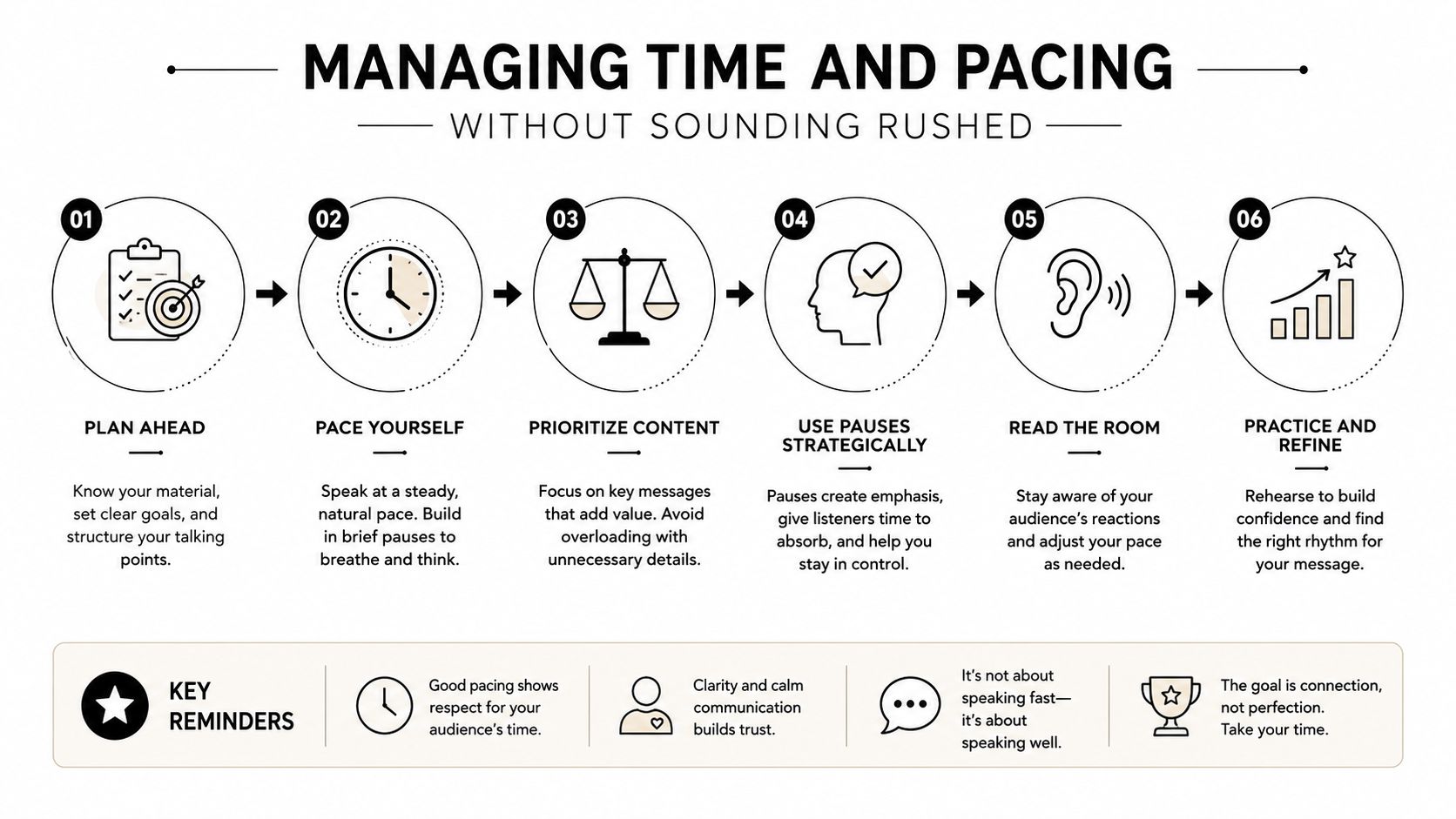
A panel loses authority fast when the moderator lets time slip. Once that happens, you stop steering the room and start reacting to it. People in the audience notice the shift right away, even if no one says it out loud.
The timing has to be planned before anyone walks on stage. The Urban Institute's moderator guide recommends keeping individual answers to roughly 2 to 3 minutes and cutting off rambling when needed so the conversation keeps moving. Scott Kirsner's panel guidance points in the same direction, with a main discussion that stays around 30 to 40 minutes, 10 to 15 minutes set aside for audience Q&A, and a panel size of 4 to 5 participants plus the moderator. The same guidance also makes one point that senior audiences respect, pacing is part of the moderator's authority, not a detail to manage later.
Use quiet interventions, not public corrections
A soft interrupt usually works better than a hard stop. Try, “I want to pause you there and bring in another perspective,” or, “That's helpful, and I want to make sure we hear from someone else on this point.” Those phrases protect the speaker's dignity while protecting the room's time. If you need a cleaner way to do that without sounding sharp, this note on how to be diplomatic maps well to the tone a strong moderator needs.
The mistake many moderators make is waiting until the panel is already over time. At that point, the intervention feels abrupt. The panelist sounds put out. The audience starts checking out.
If a panelist is answering a question from 12 minutes ago, the pacing is already gone.
Recover without skipping the room
When time gets tight, do not act surprised. Compress the discussion cleanly. Drop the second follow-up before you drop the question that matters most. If audience Q&A is going to matter, protect it early. That is often the moment when the room wakes back up.
The moderator who keeps checking the clock can sound uneasy. The moderator who has the rhythm in hand can move the discussion forward without sounding hurried. That difference matters in the room, especially when you are not the most senior person on the stage and still have to hold the floor with calm authority.
Handling Difficult Panelists and Hostile Questions
Every experienced moderator eventually meets the same three problems. The panelist who won't stop talking. The panelist who treats every question like a keynote. The audience member who enters with an edge in their voice.
Redirect without a public fight
The first rule is simple. Don't argue with a panelist in front of the room. That turns the moderator into part of the conflict, and the panel stops feeling safe. Redirect instead.
Use a name and frame move. “Maria, that's a useful perspective. I want to frame this against what James said earlier, because the tension here is important.” That keeps the discussion moving while making room for another voice.
If a panelist continues to dominate, use a pre-agreed cue. A small hand signal or a verbal phrase like, “I'm going to pause you there,” is usually enough if the panel has been briefed properly. The more senior the room, the more important it is to handle that moment without visible friction.
Answer hostile questions without absorbing the hostility
A combative audience question doesn't need a combative reply. Repeat the question clearly, strip out the heat, and hand it to the right panelist. “I'm going to restate that so everyone can hear it clearly. The question is about how this works when the assumption doesn't hold. Who'd like to take that first?” That keeps the moderator neutral and keeps the room from splintering.
If a panelist says something factually wrong, don't embarrass them. Clarify the point and move on. “I want to refine that slightly, because the practical issue is a bit different.” Then redirect to the panel or, if needed, correct the record after the session. The audience cares far more about the tone of the correction than about seeing the moderator win a point.
For more on keeping your tone firm without becoming blunt, this guide to diplomatic communication is a smart companion read.
Protect the room's temperature
Senior-level panels, board offsites, investor discussions, and keynote sessions all have the same hidden risk. Once the moderator loses composure, the room starts to mirror that energy. Calm language, short interventions, and clear boundaries keep the temperature manageable.
The moderator's job isn't to prove superiority. It's to keep the conversation useful, even when the room gets awkward.
Moderating Virtual and Hybrid Panels Effectively
Virtual and hybrid panels punish passive moderation. In a physical room, the energy can carry a weak moderator for a while. Online, the gaps show up fast. Silence feels longer, overlap feels messier, and audience participation disappears if the moderator doesn't design for it.
The strongest virtual panels treat participation as a deliberate structure, not a final add-on. Existing guidance points to audience questions throughout the session, repeating questions clearly, and using live Q&A tools or polls, but the core issue is that remote attention is fragile and the moderator has to work with that reality. A typical Q&A block may take about 25% of total time, which means it has to be built into the rhythm rather than tacked on at the end. The virtual moderation guidance from Toastmasters is useful because it reinforces this pacing and the need to repeat questions for clarity. Toastmasters' virtual panel guidance also aligns with the practical difference between in-room energy and remote attention.
Match the participation tool to the audience
Live chat, polls, and curated questions each solve a different problem. Chat works well when the audience is comfortable typing in public. Polls help when you need quick direction from a larger group. Curated questions work better when seniority is high and the room needs more structure.
If you're choosing tools for a recorded or webinar-style panel, see ProdShort's software review for a practical look at how different platforms handle recording and live delivery. The tool matters less than whether the moderator has a plan for using it.
Keep remote people visible
Repeat questions from the chat aloud so the room hears them. Name the remote participant when appropriate. Assign one person to watch the chat if the panel is live and hybrid, because the moderator can't monitor every channel and still lead the discussion well.
The awkward moment every hybrid moderator eventually faces is the remote panelist who drops offline. Don't panic, don't apologize repeatedly, and don't let the room sit in dead air. A simple, “We may have lost that connection, so I'll bring the next question in while we wait,” keeps the session steady.
For body language and camera presence, this guide on body language on camera is a useful reference because hybrid authority depends on visible steadiness as much as spoken control.
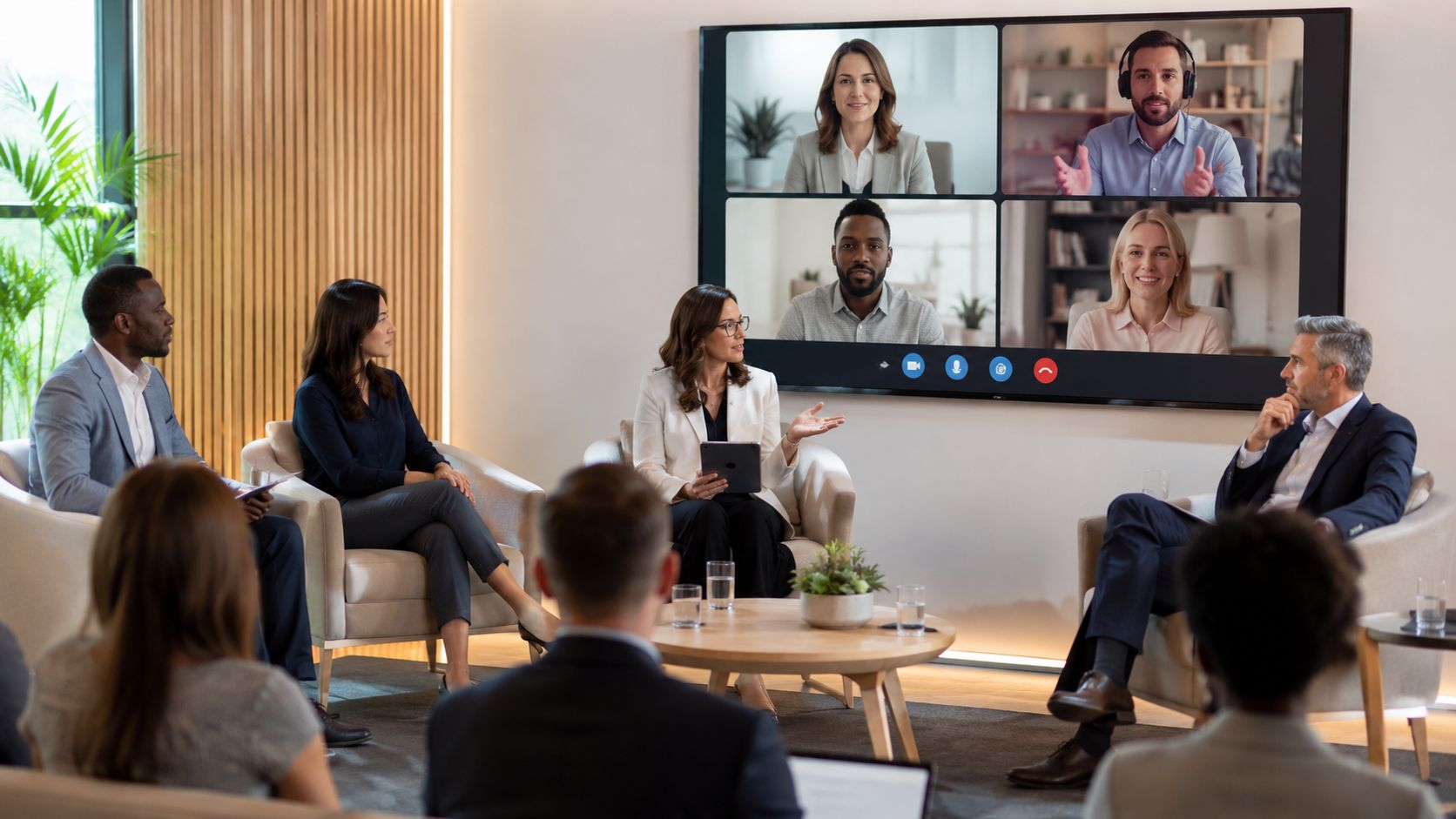
The goal is not to make a virtual panel feel identical to an in-person one. The goal is to make participation feel intentional, visible, and worth the audience's attention.
Projecting Executive Presence at the Podium
A moderator can have the right questions and still lose authority through delivery. The audience decides fast whether to trust the person holding the room, and that judgment starts with posture, eye contact, pace, and whether the moderator seems comfortable leading people who may outrank them.
The biggest presence leak is apologetic language. Phrases like “this is a great question, I'm sorry, I just want to make sure I…” weaken the frame before the answer even begins. Cleaner language sounds steadier. “Let me answer that directly.” “I want to be precise here.” “The key point is this.” Those phrases slow the room down and make the moderator sound deliberate.
What authority looks like in the first 30 seconds
Stand still when you open. Look up before you start speaking. Let the first sentence land cleanly. Those are small behaviors, but they help the room read confidence without theatrics.
Practical rule: pauses are not mistakes when they're used on purpose.
That matters most when the moderator is not the most senior person on stage. In that situation, authority comes from control of the process, not social rank. A moderator who speaks clearly, avoids filler, and holds eye contact can command more room than a highly titled panelist who rambles.
The same applies to closing. End with calm summary, not nervous acceleration. A measured finish signals that the moderator stayed in command from the first question to the last.
Panel format at a glance
| Panel Element | Recommended Range | Source |
|---|---|---|
| Main discussion | 30–40 minutes | Urban Institute moderator guide |
| Audience Q&A | 10–15 minutes | Urban Institute moderator guide |
| Q&A at the end of an hour-long panel | At least 15 minutes | Scott Kirsner's panel guidance |
| Panel size | 4–5 participants plus the moderator | Scott Kirsner's panel guidance |
| Answer length | 2–3 minutes | Urban Institute moderator guide |
| Planned questions | Up to 10, with at least one per panelist | Toastmasters panel moderator guidance |
Authority at the podium is rarely about volume. It is about being the person who makes the room feel guided, even when the conversation is lively, uneven, or unexpected.
In practice, the moderator's authority problem shows up in small moments. A senior panelist talks over the room. A sponsor representative tries to steer the discussion. A fast question from the audience lands with more heat than expected. The moderator who has executive presence does not chase the room. They hold it with calm transitions, direct eye contact, and a voice that does not rise just because someone else does.
That presence also comes from how you treat silence. If a panelist needs a second to think, let the pause sit. If a question needs tightening, restate it once and move on. If someone starts to dominate, step in early with a clear handoff such as, “I want to hear from the others on that,” or, “Let me pause you there and bring in a different view.” That kind of control feels respectful because it is specific. It tells the room that you are protecting the conversation, not competing with it.
The same discipline applies when you are not the most senior person on stage. You do not need to perform status. You need to demonstrate command of the sequence, the tone, and the room's attention. Strong moderators sound composed under pressure, use plain language, and keep their pace even when the panel gets uneven. That is what makes the audience relax and follow.
If your voice tends to soften under pressure, the complimentary Executive Communication Assessment can help you see where your presence is leaking authority and what to tighten before your next high-stakes panel.