
Accent Coaching for Turkish-Speaking Professionals
Confident Delivery. Every Word Understood.
Your English is strong. You can write clearly, follow complex conversations, and hold your own in meetings. But when you speak, something gets lost between what you mean and what people hear.



Trusted by Turkish professionals around the world

Trusted by employees of:








Our students have seen:

Greater Patient Understanding

Improved Team Communication

Increased Confidence
Have You Experienced These Frustrations?

You say “think” and it comes out closer to “tink.” You say “street” and extra vowels sneak in. You know it’s happening, but in the moment, your mouth defaults to what it knows.
Your written English is strong. But when you speak, something shifts. People focus more on following your delivery than your actual point.
And it shows up. Your ideas don’t land the same. Someone else rephrases what you said and suddenly the room engages. So you start monitoring yourself while you speak, thinking about sounds, rhythm, stress, and that makes you sound less confident than you really are.
This isn’t a language problem. It’s a pronunciation gap. And it’s fixable.
The Hidden Cost of Pronunciation Friction
Here’s what’s really happening when your accent creates friction: people understand you, but they have to work harder to follow you. And that extra effort changes how your message lands.
You see it in meetings, presentations, and technical discussions. You know the subject deeply, but certain sounds and rhythm patterns make your delivery harder to follow, so the impact drops.
And over time, it adds up. Others get more airtime. Your ideas don’t land the same. Meetings and presentations become more exhausting because you’re managing both the message and the pronunciation at the same time.
This isn’t about your English ability. It’s about speech patterns your brain learned early on, patterns that don’t automatically change when you switch to English.
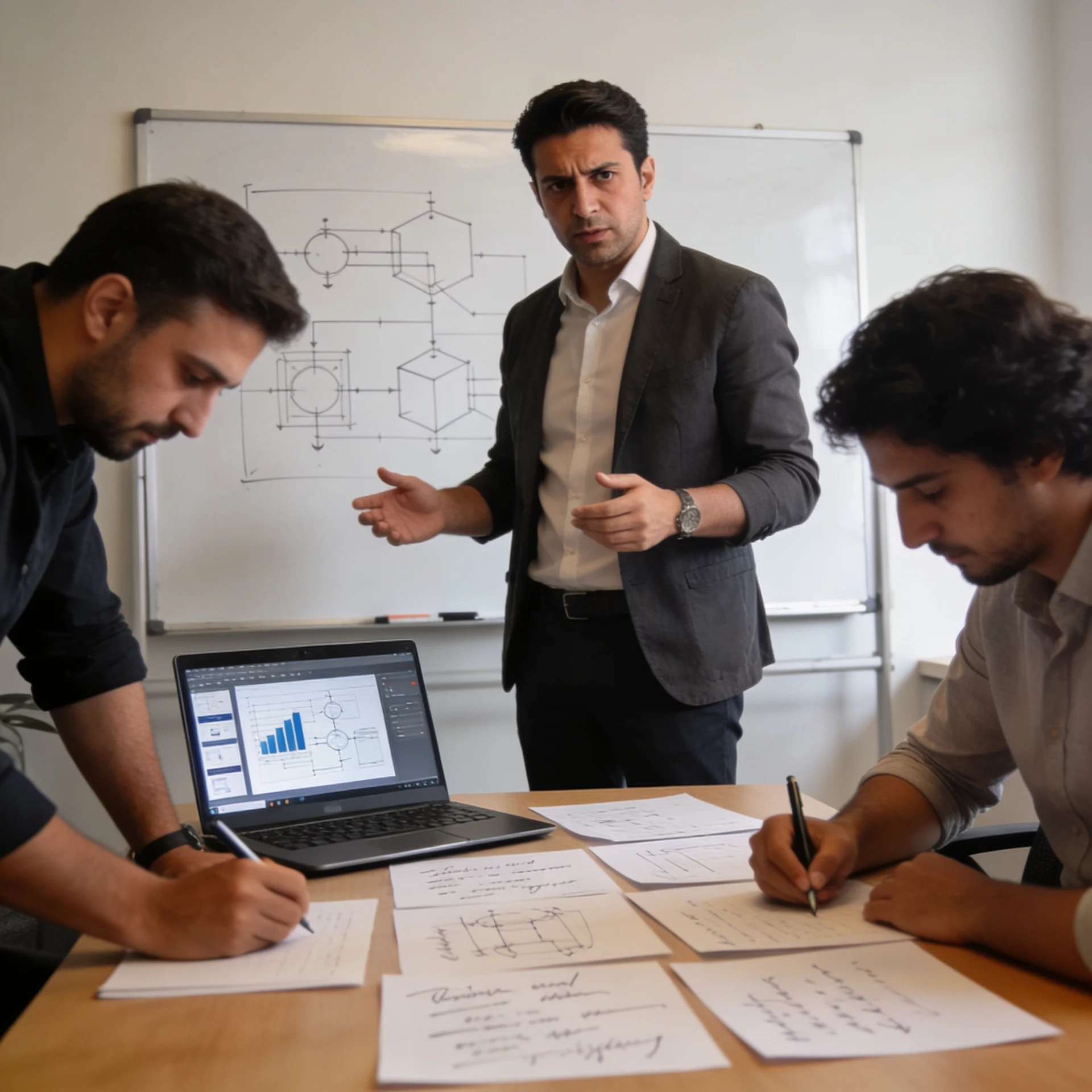
Your ideas don't get a fair hearing when pronunciation creates friction. Clear delivery removes the filter between your expertise and how it's received.
What Accent Coaching Actually Means for Turkish Speakers
This isn’t about sounding American or British, and it’s not about losing your Turkish identity. Your accent is part of who you are. The goal is simply to make your English easier to follow.
What we do is targeted. We identify the pronunciation patterns that create the most friction and retrain them. “Th” turning into “t” or “d.” “W” sounding like “v.” Extra vowels between consonants. Stress and rhythm patterns that make English harder to catch.
You already have the vocabulary, grammar, and knowledge. We just refine the delivery so your communication matches your ability.
Because most Turkish professionals don’t want to sound different. They want their ideas to land clearly the first time.

The Science Behind Your Turkish Accent
Your accent isn’t random, and it’s not a weakness. It’s a system shaped by the language your brain learned first.
Turkish has its own rhythm, sound structure, and pronunciation rules. So when you speak English, your mouth naturally follows those same patterns. That’s called phonetic transfer.
For Turkish speakers, this shows up in a few key ways.
English uses a lot of consonant clusters. Turkish doesn’t. So extra vowels often get added between sounds. “Street” becomes “sitreet.” “Spring” becomes “sipring.”
Some sounds don’t exist in Turkish at all. “Th” turns into “t” or “d.” “W” blends with “v.”
Then there’s rhythm. Turkish gives syllables more equal weight, while English relies heavily on stress and contrast. So English can sound flatter or more mechanical than intended.
And English vowels create another challenge. Sounds like “ship” and “sheep” or “full” and “fool” can blur together because Turkish uses a smaller vowel system.
None of this is random. These are learned speech patterns.
And with the right training, they can be retrained.
The Intonetic Method for Turkish Speakers

1
Identify the Sounds that Hold You Back
We start with a detailed assessment of your pronunciation, not a generic “Turkish accent” checklist.
Your actual speech.
A speaker from Istanbul will sound different from someone from Ankara, Izmir, or eastern Turkey. Your background, experience with English, and work context all shape what we focus on.
2
Create a Personalized Plan
Based on that, we build a focused plan around the changes that will make the biggest difference, fastest.
For most Turkish speakers, that means consonant clusters, “th” sounds, the w/v distinction, stress patterns, and rhythm, the patterns that create the most friction.
We focus on the 20% of changes that drive 80% of the clarity.
No time wasted on things that already work.
3
Build New Muscle Memory
Your accent lives in your muscles, not your mind. You already know how clear English should sound.
The gap is producing it consistently.
Through targeted drills, real-time feedback, and repetition, we retrain those patterns so clear pronunciation becomes automatic, not something you have to think about during meetings or conversations.
What Many Turkish Professionals Experience
When they commit to the process, our clients typically:
100% online, without commuting. Convenient, flexible, and designed for busy professionals.

Featured On
I've Helped Many Turkish-Speaking Professionals Over The Last 10 Years
I’ve worked with Turkish speakers across industries and geographies. Engineers at multinational tech companies. Business professionals managing cross-border trade between Turkey, Europe, and the US. Researchers presenting at international conferences. Entrepreneurs pitching to English-speaking investors. Consultants working across the Middle East and Western Europe.
I know which patterns show up for Turkish speakers specifically. I know that consonant cluster issues and stress placement are often more impactful than individual sound substitutions. And I know how to get you from “people strain to follow me” to “people focus on my ideas” in the shortest time possible.
This isn’t a generic accent class. It’s a system built on 10+ years of working with people who sound exactly like you do right now… and who now sound exactly the way they want to.
Don't take my word for it!
Accent training focuses on communication skills and cannot guarantee career advancement, workplace recognition, or professional outcomes. Success depends on your effort, consistent practice, and application of techniques learned. These testimonials represent individual experiences and may not be typical results.
What You Get From The Intonetic Method
Personalized Accent Evaluation
Tailored Practice Blueprint
On-the-Go Audio Training
12 One-on-One Accent Coaching Sessions
Final Progress Review
Conversational Style Sessions
AI Tongue Twister Prompts
Weekly Accountability Voice Check-ins
Are We a Good Fit?
We’re a great fit if…
However, you’re probably not a good fit yet if…
Questions Turkish Speakers Ask Before Signing Up
How quickly will I see results?
Most of my Turkish-speaking clients notice a difference within 2 to 4 weeks. The consonant cluster patterns (eliminating the extra vowels in words like “street” and “spring”) tend to shift first because the fix is specific and mechanical. “Th” sounds and rhythm adjustments take a bit longer. By month 2 or 3, the change is noticeable to everyone around you. Full transformation typically takes 4 to 6 months depending on your starting point and daily practice consistency.
My written English is excellent. Why is my spoken English still a problem?
Because writing and speaking use completely different systems. Writing uses grammar and vocabulary. Speaking uses those plus mouth mechanics, rhythm, stress patterns, and airflow. Turkish and English share almost no sounds in common in their trickiest areas (“th,” “w,” vowel distinctions, consonant clusters). Nobody taught you the physical positions for these sounds. Your grammar and vocabulary are an asset here because they mean the only thing left to fix is the delivery. And that’s the most targeted, most efficient fix there is.
Will I sound fake or unnatural?
No. We’re adjusting specific sounds and patterns, not replacing your voice. The result sounds natural because it is natural. It’s your English with the friction removed. Most clients say colleagues don’t notice they “changed their accent.” They just notice that conversations flow more easily.
I insert extra vowels into consonant clusters without realizing it. Can that really be fixed?
Yes, and it’s one of the most satisfying patterns to fix because the change is so audible. Turkish doesn’t allow the consonant stacking that English uses constantly, so your mouth has been inserting vowels to make those clusters feel normal. We retrain the muscle patterns so your mouth can handle “str,” “spr,” “nts,” and other clusters smoothly. Once it clicks, words like “street,” “spring,” and “strengths” stop having extra syllables. The improvement is immediate and noticeable.
I work across multiple markets (Europe, Middle East, US). Which English should I target?
This is a common question from Turkish professionals because you often operate at the crossroads of several English-speaking contexts. My recommendation: focus on general clarity rather than a specific regional accent. We target the patterns that create friction regardless of whether your listener is American, British, Australian, or a non-native English speaker themselves. Clear pronunciation works everywhere. If you have a primary market, we can calibrate toward that, but the core work is universal.
Is your approach different from the English courses I took in Turkey?
Very. English courses in Turkey (and most language schools generally) teach grammar, vocabulary, and reading comprehension. They don’t teach you how to physically position your tongue for a “th” sound, or how to produce consonant clusters without vowel insertion, or how English stress-timing works differently from Turkish syllable-timing. Those are the specific things that create accent friction, and they’re exactly what we train.