
Communications Programs Ontario: Top Options for 2026
Finding your voice in Ontario can feel urgent and uncomfortable at the same time. You already know your work is solid, but when the conversation moves into boardrooms, stakeholder meetings, interviews, or executive presentations, your message can flatten out. That's why communications programs Ontario matters as a search, and as a career decision, because the right program can help you speak with more authority, structure ideas under pressure, and move toward senior roles with more confidence.
The best options aren't just about learning media theory or polishing a résumé. Ontario's pipeline includes applied diplomas, graduate certificates, professional master's programs, and research-heavy degrees, and the province's career markets reward people who can handle strategic communication, digital fluency, and executive-level credibility. If you're aiming higher, the key question is not whether a program sounds reputable, but whether it changes how you communicate in critical situations.
1. Toronto Metropolitan University Master of Professional Communication
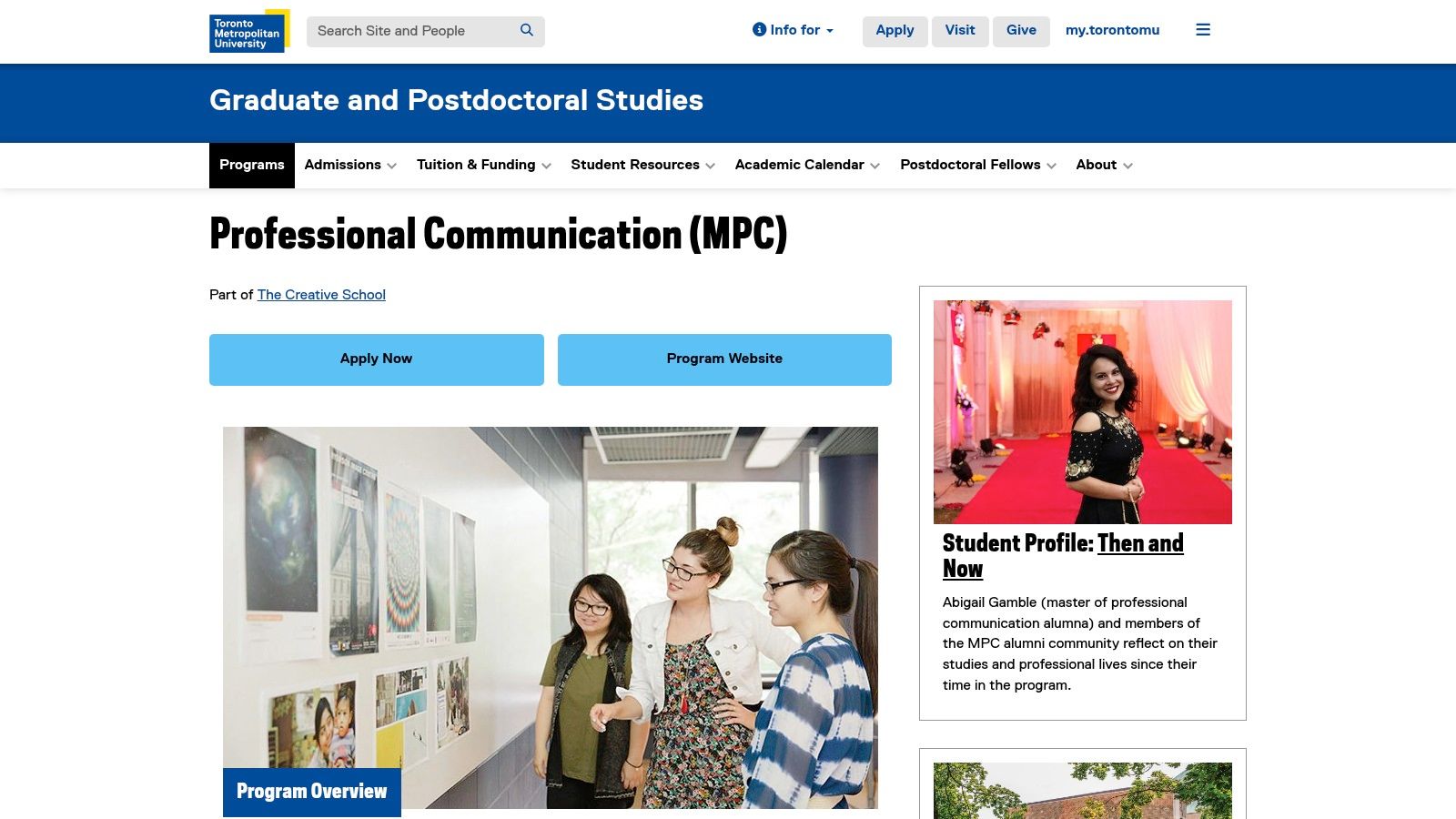
Toronto Metropolitan University's Master of Professional Communication is one of the clearest fits for professionals who want applied communication training with real workplace relevance. Its appeal is obvious if you're not looking to disappear into theory. You're looking to sharpen how you lead meetings, frame ideas, and produce work that holds up in Toronto's media, tech, and corporate environment.
The program's own structure makes that practical intent easy to see. TMU describes a full-time 4-year professional communication degree pathway at the undergraduate level in Ontario, and the graduate Professional Communication MA sits inside that same career-oriented ecosystem, which helps explain why the school has such a strong professional brand. For international professionals, that matters because executive presence rarely comes from a single class. It comes from repeated practice in a serious cohort with peers who care about messaging, delivery, and reputation.
Practical rule: If you want a program to improve authority, look for one that forces you to present, revise, and defend ideas, not just write about them.
TMU is strongest for people who want structured training and access to a city where communications jobs are concentrated. It's less attractive if you need maximum flexibility or want a light-touch, mostly online experience. If you're comparing communications programs Ontario through the lens of senior advancement, this is a strong pick when you want credentials plus a professional network, not just another line on your CV. Use the program site to confirm the latest structure and admission details on the TMU Professional Communication graduate page, and if you're trying to understand how the field itself gets defined in practice, the internal breakdown at types of professional communication is worth a close read.
2. York University Plus TMU Joint MA in Communication and Culture
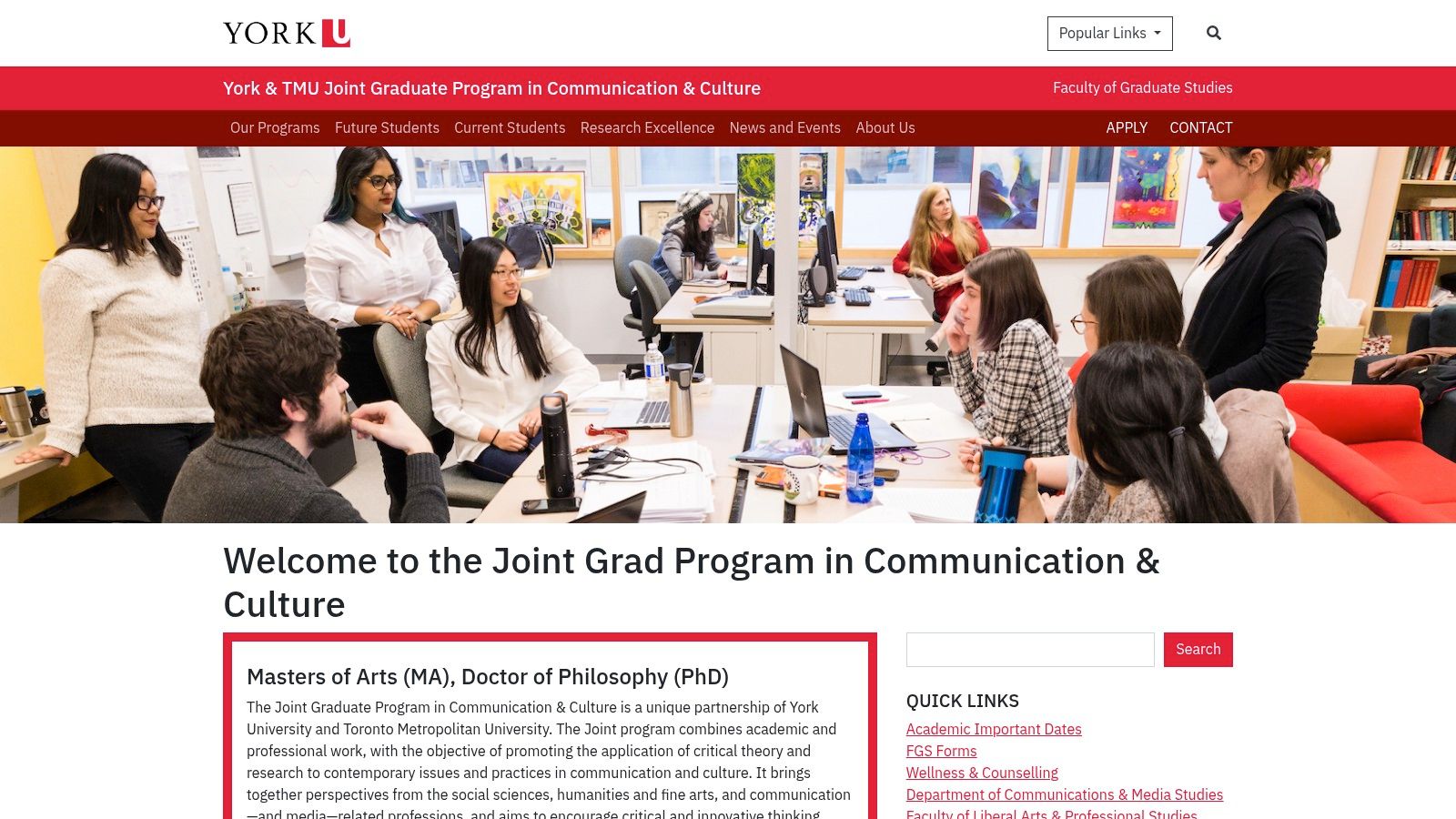
The York University and TMU joint MA in Communication and Culture is a different kind of signal. It tells employers, policy teams, and academic supervisors that you're comfortable with theory, culture, institutions, and media systems, not only execution. That makes it a better match for people who want to influence how communication is understood, not just how it is delivered.
The program is especially useful if your career path crosses policy, research, or culturally sensitive communication work. Ontario's labour market is changing, and communications roles increasingly ask for people who can adapt across channels, sectors, and audiences. A research-intensive MA gives you depth, which can be valuable if you're pursuing consulting, public-sector analysis, advocacy, or doctoral study later on.
Its biggest strength is also its biggest trade-off. You get access to resources across two major Toronto universities, but you also take on the logistical complexity of a joint program. That's not a minor issue for working professionals who need predictability. If your goal is senior communication authority in industry, the research lens may feel slower than a professional master's or graduate certificate.
The joint MA makes the most sense when you want intellectual range and long-term credibility more than immediate production training.
This is the program for people who can explain why a message works, how culture shapes reception, and where communication policy intersects with institutions. That matters if you're aiming for roles where judgment and interpretation matter as much as writing skill. Review the official details on the York University Communication and Culture graduate page, and if your audience work crosses languages or cultural contexts, the internal guide on cross-cultural communication training will help you judge whether this path matches your goals.
3. Carleton University MA in Communication
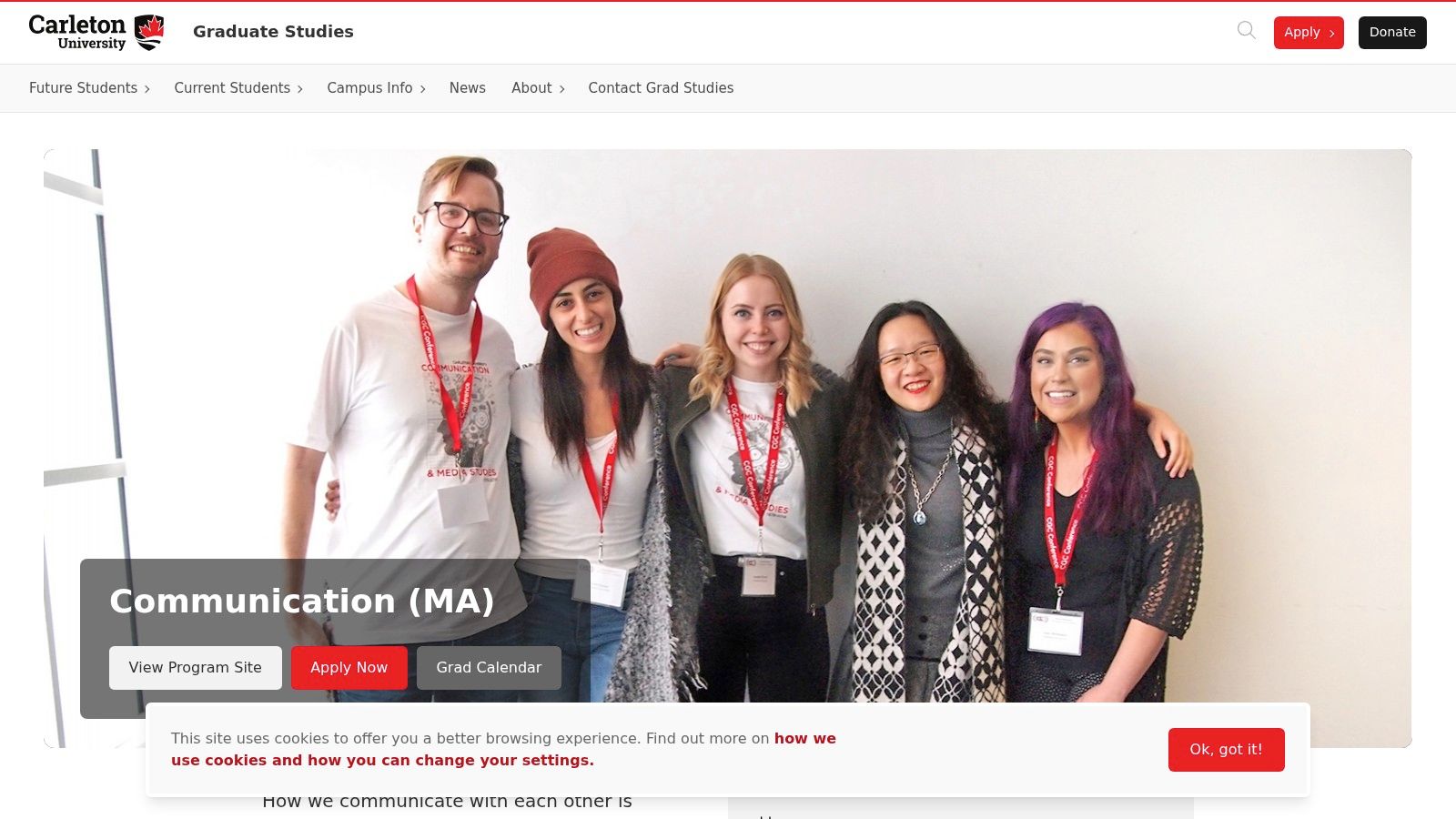
Carleton's MA in Communication stands out for a simple reason, it sits in Ottawa, where policy, government, and public-affairs communication are part of the professional fabric. If you want a graduate program that leans into analysis, research, and public-facing communication work, this is one of the strongest Ontario choices.
The academic feel is more pronounced here than in a typical professional communications program. Students can pursue thesis or research essay routes, which makes the degree a strong fit for anyone aiming at doctoral study or work that depends on careful interpretation of media, technology, and political communication. That same research orientation can be an asset if you're trying to move into communications strategy inside government, NGOs, or public institutions.
For international professionals, the appeal is credibility. A research-heavy MA can help when you need to show that your communication skills are not just practical, but intellectually rigorous. The downside is equally clear. If you want lots of production work, internship-style momentum, or a fast route into tactical skill building, this won't feel as immediately applied as some Ontario college options.
Carleton also makes applicants pay attention to fit. The university notes admissions guidance and funding information for international applicants, but the practical takeaway is broader. This is a program for people who are ready to commit to a deeper communication identity, not just a quick rebrand.
If you want to move toward government or policy communication, choose the program that trains you to write with precision and defend an argument under pressure.
Use the official Carleton Communication MA page to verify the current route and funding details. For a sharper senior-level skill angle, the internal resource on master strategic communication skills pairs well with this program's public-affairs profile.
4. Western University Master of Media in Journalism and Communication
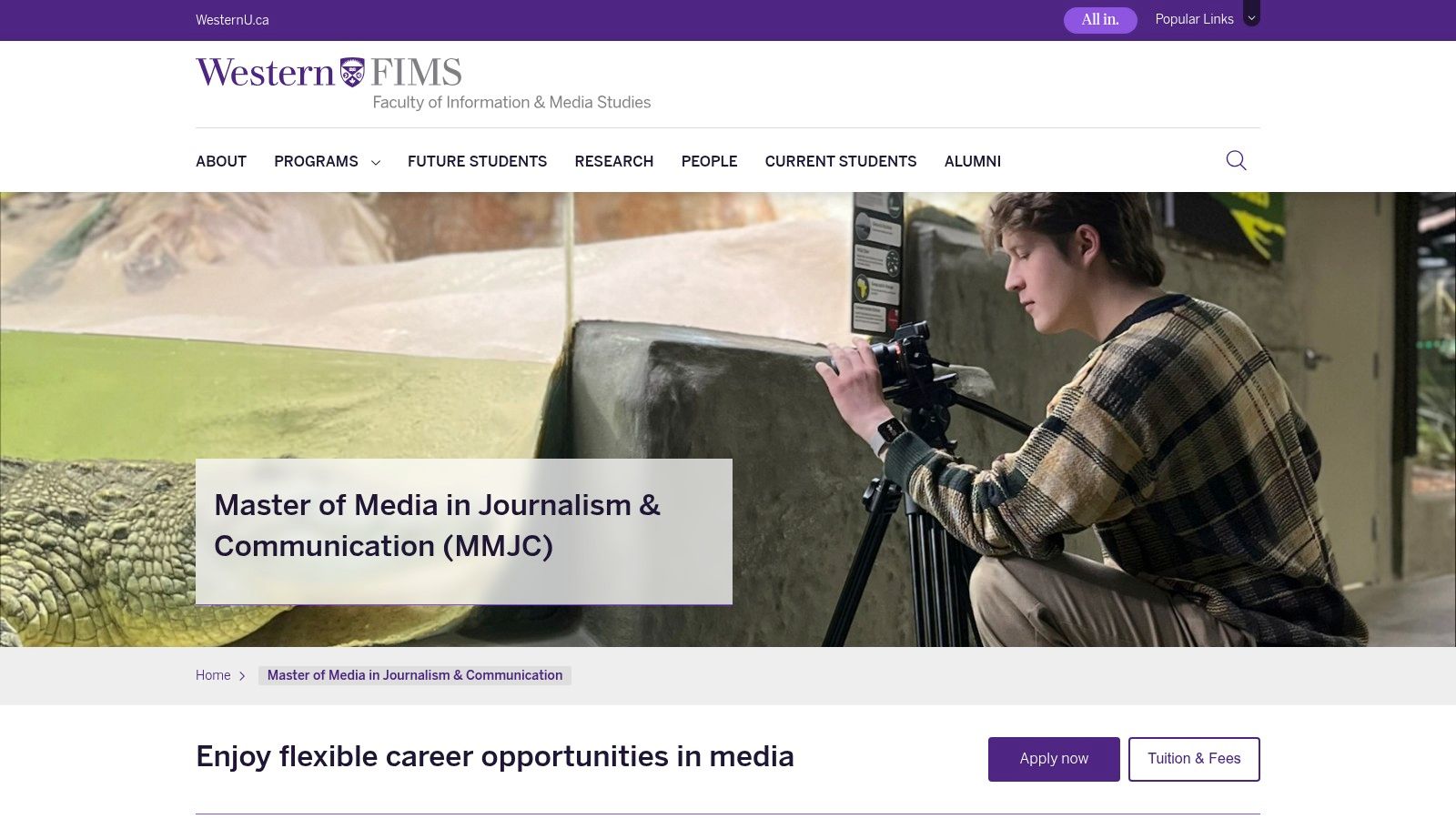
Western's Master of Media in Journalism and Communication is the program to watch if you want intense, hands-on training that bridges journalism and organizational communication. It's a professional master's built for people who want to produce better work fast, not slowly accumulate theory.
The internship requirement gives the program real career texture. That matters because communications roles are increasingly judged by output, not intention. You need a portfolio, a record of execution, and confidence under deadlines. Western's blend of storytelling, analytics, multimedia, and practical production helps if you're moving from adjacent fields into communication work, or if you're trying to turn editorial skill into broader corporate value.
The fit is strongest for professionals who can handle an immersive schedule. It's less forgiving for people balancing demanding jobs or family obligations. That trade-off is normal in intensive professional education, but it's still a real one. If you're comparing options for senior advancement, ask whether a program gives you authority in rooms, or only technical experience. Western does well on practical experience, especially for people who need to build credibility through visible output.
You'll also want to think about how the internship and portfolio pieces line up with your target role. Someone aiming for media relations, corporate communications, or content leadership may benefit more here than someone whose goal is policy communication or executive coaching. The program's strength is that it builds evidence of competence, not just academic language.
Use the official Western MMJC program page for current structure and fee information. If you want to sharpen how you present ideas in high-pressure settings, the internal guide on informative speech how to fits this production-heavy path well.
5. Seneca Polytechnic Public Relations Corporate Communications Graduate Certificate
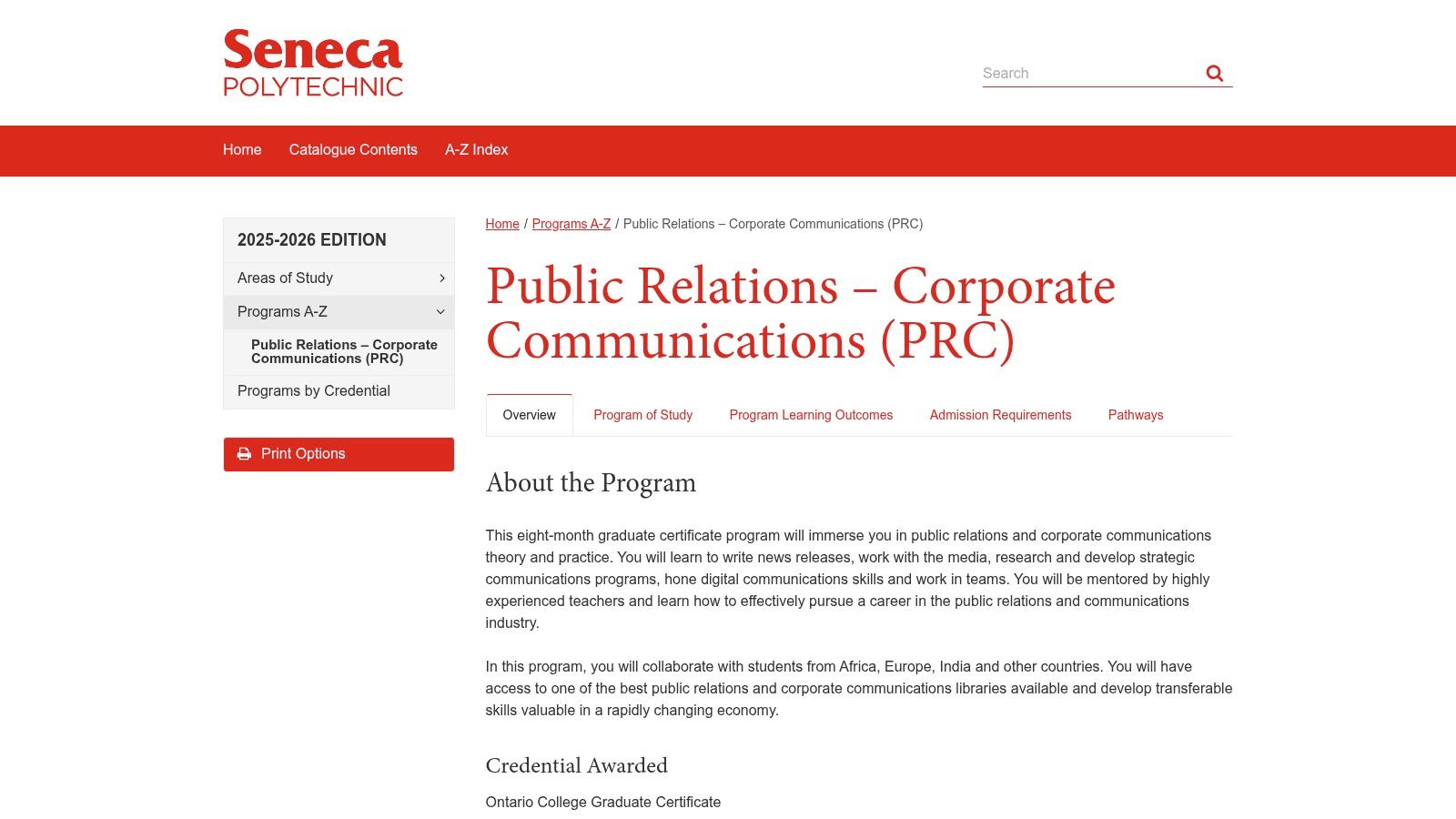
Seneca's Public Relations, Corporate Communications graduate certificate is the practical choice for professionals who want speed, not ceremony. It focuses on media relations, strategic planning, internal communication, digital and social media, and presentation skills, which makes it useful if you need to move quickly into a PR or corporate communications role.
This is one of the better fits for people who already know they need applied skills more than another degree title. The program's recognition by professional bodies such as CPRS and IABC gives it added practical value for practitioners who want a credential that aligns with industry expectations. In a market where Ontario employers care about adaptability and execution, that combination can be more useful than a longer academic route.
The optional work-term stream is a major advantage if you need a bridge into the Toronto market. The downside is straightforward, it's a graduate certificate, not a master's degree. For some employers, that distinction matters less than portfolio quality and fit. For others, especially at the senior level, it still matters. The right question is whether the program gets you closer to authority, influence, and better internal credibility.
If your priority is faster upskilling, this is a smart option. If your priority is a more formal academic credential, you may want a master's-level route instead. The program also offers multiple start dates, which helps people who can't wait a full year to begin.
Review the details on the Seneca PR Corporate Communications page, and if you want to connect persuasion to executive communication, the internal piece on communication as persuasion is a useful companion.
6. Fanshawe College Digital Communication Management Graduate Certificate
Fanshawe's Digital Communication Management certificate is built for the modern reality of communications work. Content strategy, social media, UX for communications, multimedia production, web, and analytics all sit in the same program, which is exactly what many hiring managers now expect in digital-first roles.
That broad digital stack is the point. Ontario's communications labour market increasingly rewards people who can move between writing, publishing, measurement, and platform thinking. Fanshawe is a strong fit if you want a practical, shorter route into a role where digital production matters every day. It's particularly relevant for applicants who want transparency before enrolling, because the program page publishes a total program cost summary for domestic and international students.
A short, focused certificate can be the better choice when your goal is employability rather than academic depth. It can also be the better choice when you're already working in communications and need a targeted refresh rather than a full reset. The trade-off is obvious. You get intensity and practical skill coverage, but not the credential weight of a master's degree.
For international professionals, this program makes sense if your resume already shows experience and you need a clearer digital profile. It's less useful if you're seeking executive presence training or leadership communication. The curriculum helps you create, manage, and measure communication assets. It does not usually solve the authority gap that shows up in senior meetings.
Use the official Fanshawe Digital Communication Management page to check current intake details. If your work is shifting online, the broader issue is not just learning tools, but learning how to speak clearly inside digital systems where attention is limited and expectations are high.
7. Mohawk College Public Relations Corporate Communications Graduate Certificate
Mohawk's Public Relations, Corporate Communications graduate certificate is one of the more regionally grounded options in Ontario. It emphasizes media relations, content development, campaign planning, stakeholder and community relations, and both agency and in-house PR practice. That makes it especially useful for people who want a hands-on route into the Greater Toronto and Hamilton Area job market.
The program's practical value is in its employer proximity. If you want an applied credential that connects directly to regional hiring, Mohawk gives you that. The Hamilton location can also be easier on day-to-day costs than downtown Toronto, which matters if you're a working professional or an international student planning your budget carefully.
There's a subtle strength here for people who want to move into communications from adjacent roles. Campaign planning and stakeholder communication are transferable in a way that many employers understand immediately. If your goal is to earn trust quickly in an internal communications, PR, or community-facing role, that applied orientation helps.
The limit is still the same one shared by most certificates. You're getting a focused credential, not a broad graduate degree. That's not a problem if you need practical credibility and faster entry. It is a problem if you want the academic signaling that a master's can provide for later leadership moves.
Mohawk also mentions a Brock plus Mohawk pathway option, which is useful if you want to plan beyond the first credential. For current details, check the Mohawk Public Relations Corporate Communications page. If your end goal is stronger speaking presence in rooms where decisions get made, the program is a starting point, not the whole solution.
Comparison of 7 Ontario Communications Programs
| Program | 🔄 Delivery & resource needs | ⚡ Duration & flexibility | 📊 Expected outcomes & career impact | 💡 Ideal use cases | ⭐ Key advantages |
|---|---|---|---|---|---|
| Toronto Metropolitan University, Master of Professional Communication (MPC) | 1‑yr cohort; primarily in‑person in Toronto; practicum or Major Research Paper; competitive admission | 12 months; cohort schedule; limited part‑time flexibility | Applied leadership & organizational/digital comms; strong employer links in Toronto | Professionals seeking workplace‑ready leadership roles and industry networking | Professional focus; practicum option; strong alumni/industry network |
| York University + TMU, Joint MA in Communication & Culture | Research‑intensive; delivered across two campuses; access to dual resources and research streams | Multi‑term research MA; less time‑compressed; PhD pathway available | Preparation for policy, academic or research careers; theoretical grounding | Students aiming for policy, academic, or tech/culture research roles | Interdisciplinary breadth; access to resources at both universities |
| Carleton University, MA in Communication | Research‑focused; thesis or research essay options; Ottawa location with government proximity | Typical research MA timeline; campus‑based; variable depending on thesis | Strong base for doctoral study or government/NGO/policy communications roles | Applicants targeting public‑affairs, policy communications, or academia | Recognized research profile; proximity to federal institutions |
| Western University, Master of Media in Journalism & Communication (MMJC) | 1‑yr intensive; in‑person with mandatory internship and professional equipment | 12 months; high intensity; limited flexibility for working professionals | Portfolio + internship readiness for journalism, media, and corporate comms roles | Career changers or upskillers seeking hands‑on multimedia and newsroom skills | Hands‑on production training; mandatory internship; multimedia & analytics focus |
| Seneca Polytechnic, Public Relations – Corporate Communications (Graduate Certificate) | 8‑month, two‑semester certificate; optional work‑term; recognized by CPRS/IABC; Toronto employers | 8 months; multiple start dates; some flexible delivery | Fast entry/upskill for PR and corporate communications roles | Individuals seeking quick, credentialed entry into PR/CC roles | Short duration; industry recognition; strong employer network |
| Fanshawe College, Digital Communication Management (Graduate Certificate) | 30‑week, two‑semester program focused on digital content, UX, analytics; published total cost | 30 weeks; intensive; multiple start dates; limited time for part‑time work | Ready for digital‑first roles (content strategy, social media, analytics) | Candidates targeting digital communication or UX‑focused communications roles | Transparent total cost; in‑demand digital skillset |
| Mohawk College, Public Relations – Corporate Communications (Graduate Certificate) | 1‑year applied certificate; employer links in GTHA; pathway options with Brock University | 12 months; campus‑based; Hamilton location may lower living costs | Practical PR skills for agency or in‑house roles; regional employer connections | Learners wanting applied PR training with local employer ties | Applied curriculum; strong regional employer connections; potential cost advantage |
Your Next Step Toward Communication Mastery
Choosing among communications programs Ontario is really a question of what kind of communicator you need to become. Some paths build research depth, some build production skill, and some build speed into the job market. For international professionals who want senior roles, the best option is the one that strengthens both your résumé and the way you sound when you're under pressure.
Ontario's labour market is changing fast. Job Bank currently rates professional occupations in advertising, marketing, and public relations in Ontario as limited for 2025 to 2027, while also pointing to employment growth, few openings from retirements, downsizing by major employers, and AI-driven technologies reshaping job functions (Ontario Job Bank outlook). That means credentials alone won't carry you. You need communication that feels strategic, credible, and adaptable.
Ontario's education pipeline is broad, from graduate certificates to specialized degrees, and the province's programs are clearly tied to key sectors like high-tech, healthcare, pharmaceuticals, and retail (Ontario Colleges communications programs). But the programs that move people into leadership are the ones that teach them to frame ideas, speak with authority, and handle difficult conversations without losing composure. That is where executive presence becomes the key differentiator.
If you're unsure which direction fits your goals, start with a professional communication review instead of guessing. A clear outside assessment can show whether your next step is academic, practical, or leadership-focused, and it can save you from enrolling in the wrong path for your career stage.
A CTA for Intonetic. Start with the free Executive Communication Assessment, because it's the fastest way to identify the specific gaps holding back your authority, credibility, and influence at senior levels.