10 Best Executive Communication Books for Leaders in 2026
You're already doing the hard part. You've built expertise, you solve real problems, and you've earned your seat in important rooms. But if your updates run long, your presentations feel overexplained, or your answers lose force under pressure, senior leaders won't always see the level you're operating at.
That gap is painful because it rarely reflects intelligence. It reflects perception. The room reads structure, presence, timing, and delivery long before it fully evaluates the content. A strong idea delivered with hesitation often lands below its value.
That's why the right executive communication books matter. Used well, they become a practical training stack. They help you tighten your message, sound more senior, handle pushback, and communicate with the kind of authority that matches your capability. This list isn't a generic roundup. It's a curated reading curriculum for international professionals who want a clear path from foundational clarity to advanced executive presence.
One more reason this category deserves attention. The books market is projected to grow from USD 150.06 billion in 2026 to USD 224.01 billion by 2034, with North America holding 35.42% of the market in 2025 according to Fortune Business Insights' books market outlook. That matters because executive communication books sit inside a large, durable category with enough depth to support specialized reading paths instead of one-size-fits-all advice.
1. Executive Presence (Original & 2.0) by Sylvia Ann Hewlett
If you read only one author to understand how organizations talk about senior-level credibility, start here.
Sylvia Ann Hewlett's Executive Presence: The Missing Link Between Merit and Success is a major milestone in the field. It's widely cited as foundational, and its most useful contribution is simple. It defines executive presence through three visible elements: gravitas, communication, and appearance, as described in this overview of executive presence books. That framing gave managers and leadership programs a shared language for discussing why some high-performers advance and others stall.
Why it still matters
The original book gives you the baseline vocabulary. Executive Presence 2.0 helps translate those ideas into a modern environment shaped by hybrid work, video calls, and more visible expectations around leadership style.
For international professionals, that combination is especially useful. It separates vague advice like “be more confident” from signals people read in meetings. If you want a practical companion to these ideas, Intonetic's guide on how to improve executive presence is a good next step after the book.
Practical rule: Read the original for the model. Read 2.0 for context. Don't skip the first book and assume the update replaces it.
A trade-off is that Hewlett's lens often feels most natural inside large corporate settings. If you work in a startup, engineering-led company, or highly informal culture, you'll need to adapt the signals rather than copy them.
Another limitation is that presence books often stop just before the hardest moments. They help you understand how credibility is perceived, but they don't always teach you how to answer a hostile question in real time. That's why this book belongs first in the curriculum, not last.
For a complementary outside perspective on cultivating authentic executive presence, it helps to compare Hewlett's framework with advice that emphasizes alignment rather than performance.
2. The Pyramid Principle (3rd edition) by Barbara Minto
Some books improve how you sound. This one improves how you think on the page and in the room.
Barbara Minto's The Pyramid Principle remains the strongest book I know for learning top-line-first communication. If senior leaders seem impatient with your updates, there's a good chance your ideas arrive in the wrong order. Minto fixes that problem by forcing you to lead with the answer, group supporting points cleanly, and build a structure that survives scrutiny.
Best for people who overexplain
This book is especially strong for consultants, product leaders, finance professionals, and technical experts who know too much to be naturally concise. That sounds like praise, but it's also the problem. Deep expertise often creates bloated communication.
The practical value shows up in moments like these:
- Executive summaries: You stop writing background first and start with the governing thought.
- Board slides: You build a storyline that guides decisions instead of dumping analysis.
- Status updates: You separate key messages from supporting detail before anyone gets lost.
If your written communication also needs work, pair this with Intonetic's guidance on formatting business reports. The structure habits reinforce each other.
The downside is tone. The Pyramid Principle can feel more like a discipline than a friendly coach. Some readers bounce off it because the prose is dry and the examples don't always feel current. Ignore that. The underlying logic is still unusually strong.
This is not the book I'd hand to someone who freezes during Q&A. But for people who ramble, bury conclusions, or present analysis without a clear recommendation, it can change their executive communication faster than almost anything else on this list.
3. Simply Said: Communicating Better at Work and Beyond by Jay Sullivan
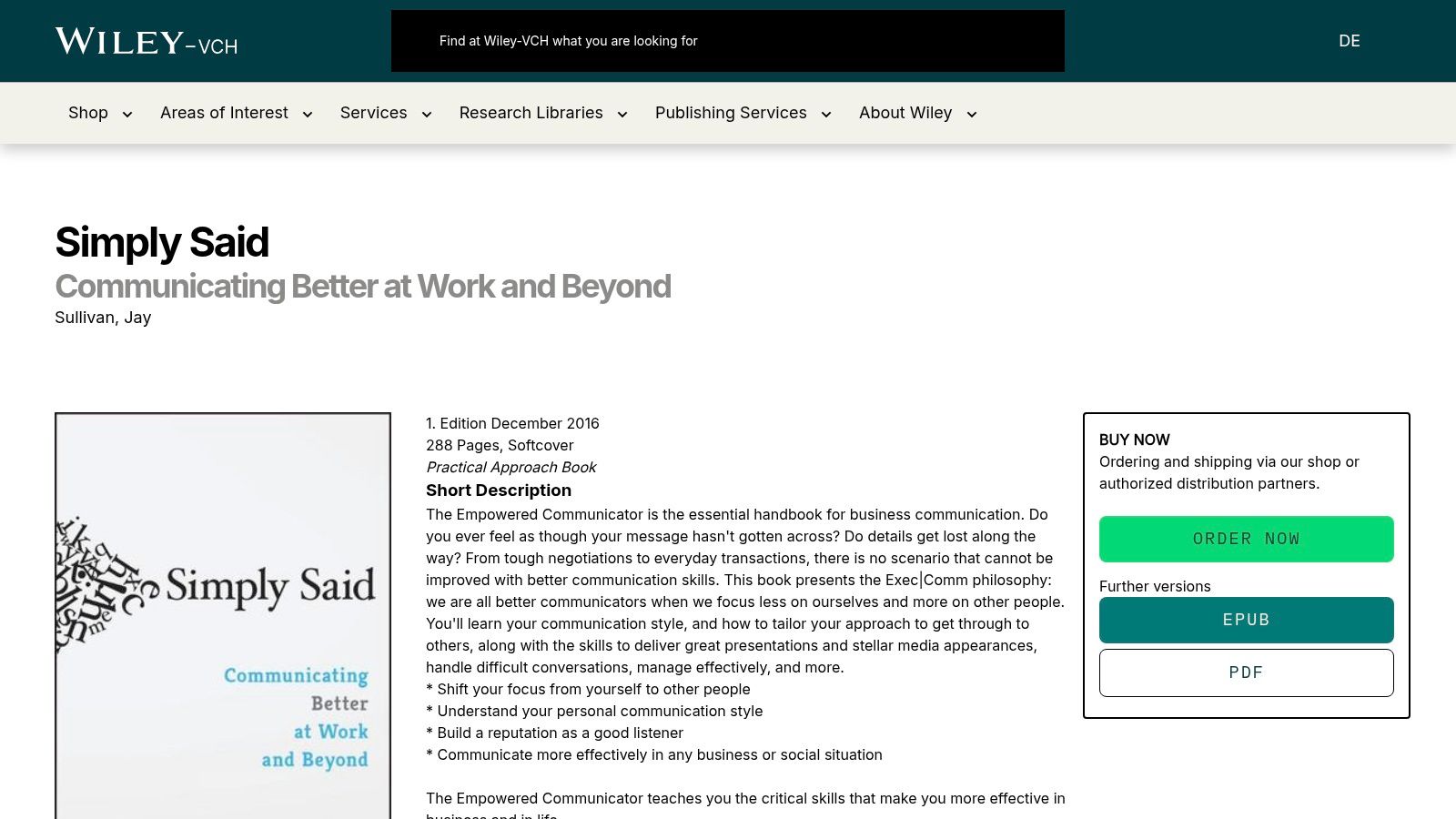
Some books are brilliant but hard to apply on Tuesday morning. Simply Said is not one of them.
Jay Sullivan writes like someone who has sat through too many unclear meetings and decided to fix the problem directly. The book is practical, plainspoken, and broad enough to help with presentations, feedback, one-on-ones, email, and everyday workplace clarity. For non-native English speakers, that directness is a real advantage because the advice is easier to transfer into daily use.
Where it earns its place
This is one of the best bridge books between broad communication advice and executive expectations. It doesn't get lost in theory, and it doesn't assume your only communication challenge is delivering keynote speeches.
What it does well:
- Audience focus: It keeps pulling you back to what the listener needs, not what you want to say.
- Message trimming: It helps you cut explanation without sounding abrupt.
- Workplace range: It covers live and written communication, which is how most professionals operate.
A limitation is depth. If you want a heavy framework for persuasion theory or a research-led model of executive presence, this isn't that book. It's more useful as a field manual than as a big intellectual system.
Good executive communication often sounds simpler than the speaker feels while delivering it.
That's why I recommend this book early in the reading order. It helps you get cleaner, faster, and more audience-aware before you move into more specialized books on pressure, brevity, or nonverbal authority. It's one of the more usable executive communication books for professionals who need immediate gains rather than abstract insight.
4. Think Faster, Talk Smarter by Matt Abrahams
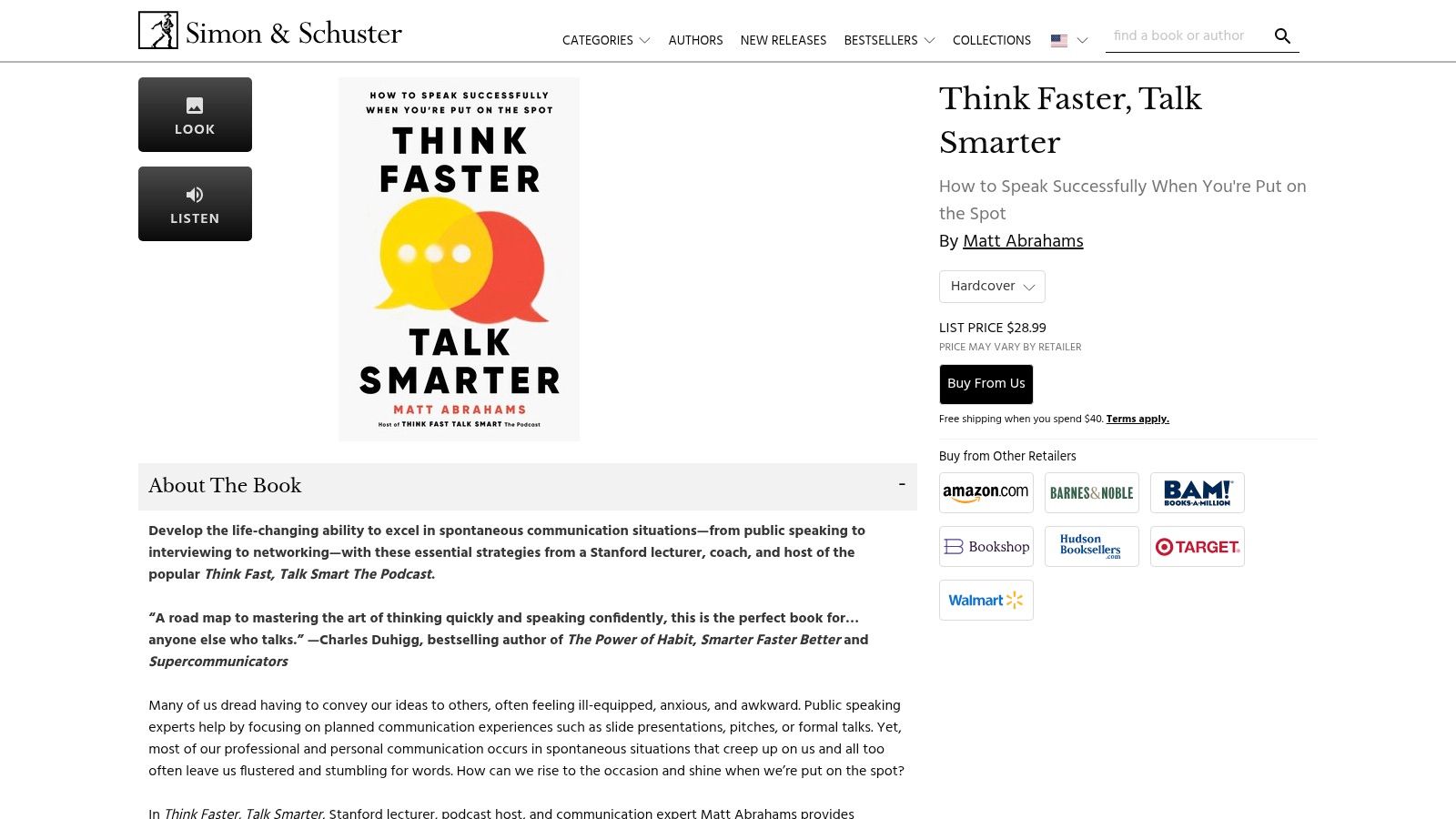
This is the book for the moment after your polished presentation ends.
A major gap in executive communication books is that many still focus on broad leadership qualities like clarity, gravitas, presence, and narrative framing, while giving much less operational guidance for hostile Q&A, boardroom pushback, or speaking under pressure, as noted in Vautier Communications' leadership communication book list. That gap hits international professionals especially hard because they're often judged not on technical skill, but on how they sound when they have no script.
Best for unscripted pressure
Matt Abrahams is strong exactly where many books go thin. He focuses on the unscripted moments that shape executive credibility fast: tough questions, impromptu comments, interviews, feedback, and moments when you need to respond before you feel ready.
If you regularly think, “I know what I mean, but I can't package it quickly enough,” this belongs high on your list. Pair it with Intonetic's article on how to think on your feet and you've got a solid practice path.
A few clear strengths stand out:
- Pressure-friendly frameworks: You get structures that are usable in live conversation.
- Anxiety management: He addresses the mental spiral that often wrecks otherwise smart answers.
- Realistic scope: The book stays focused on spontaneous speaking instead of pretending to solve every communication problem.
The trade-off is equally clear. This won't teach you how to build a board deck or write a strategic memo. It solves a narrower problem. But it solves an important one, and one that many senior professionals underestimate until they're in a difficult room.
If your authority drops most in Q&A, this book is more valuable than another general title on “leadership communication.”
5. Crucial Conversations (3rd Edition)
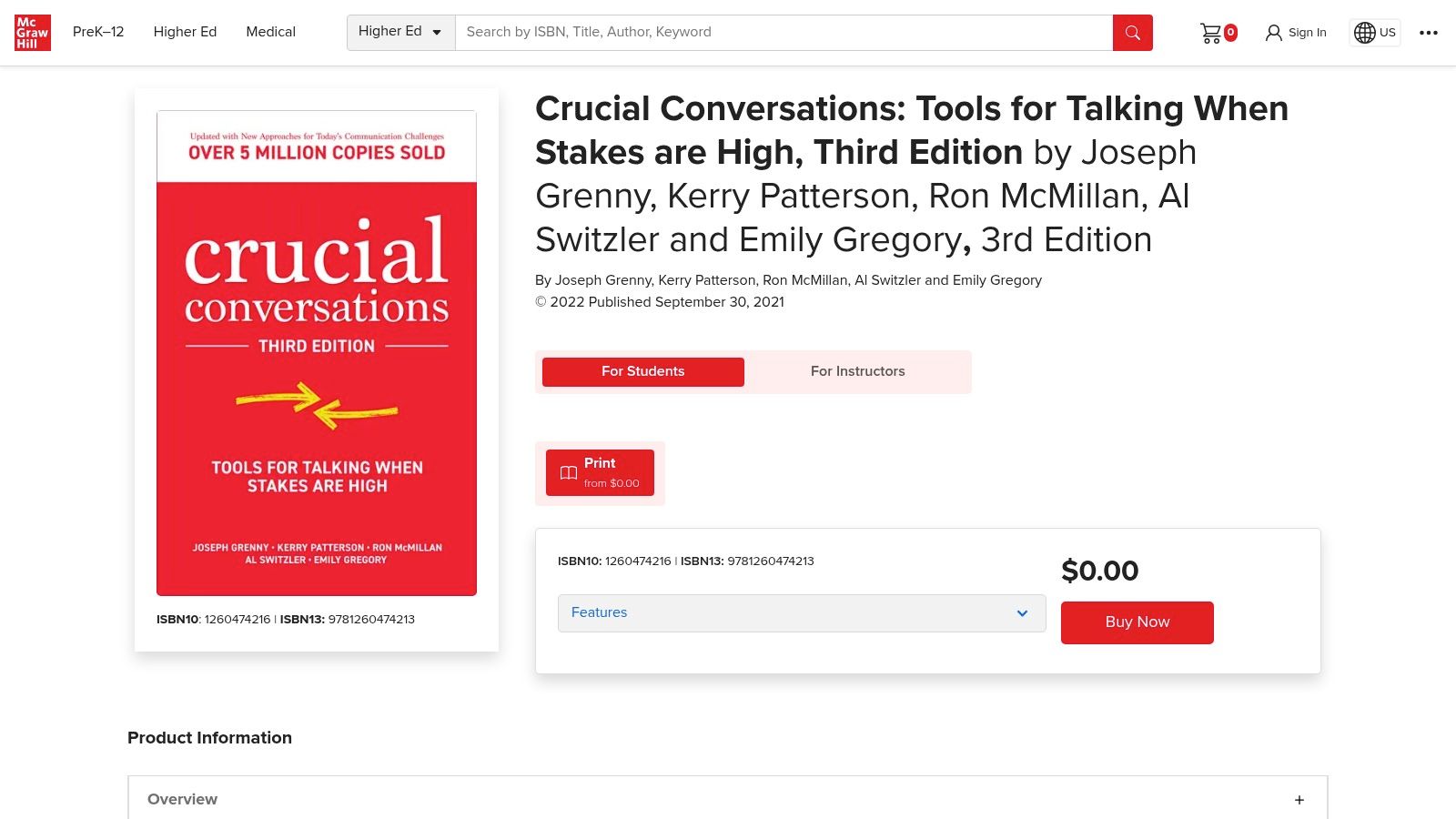
Not every executive communication problem is a presentation problem. Many are conversation problems.
You can be articulate in a formal meeting and still lose ground in conflict. You soften too much with a difficult peer. You avoid direct language in a performance conversation. You react defensively when challenged. Crucial Conversations is one of the most useful books for staying constructive when emotions rise and stakes are real.
What it helps you do in practice
This book earns its reputation because it turns high-stakes dialogue into something trainable. It gives you ways to prepare, open, and manage difficult conversations without defaulting to either aggression or avoidance.
That makes it highly relevant for senior professionals who need to:
- Push back upward: Disagree with a leader without sounding combative.
- Handle performance issues: Stay direct without becoming cold.
- Manage tension: Keep dialogue open when the other person becomes defensive.
Intonetic's article on how to talk to senior leadership works well alongside this book because many difficult conversations happen vertically, not just peer to peer.
When stakes are high, many professionals become either too blunt or too careful. Neither reads as strong leadership.
The book's limitation is that it's less about executive storytelling or strategic messaging. It won't sharpen your slide structure or help you sound more concise in a board update. It's a process book for hard conversations.
That said, executive presence isn't just how you present in calm conditions. It's also how you hold your center when disagreement enters the room. On that front, this book remains one of the more practical entries in the category.
6. Smart Brevity by Jim VandeHei, Mike Allen, and Roy Schwartz
If your emails are respected but not read, Smart Brevity should move up your list.
This book matches the way many busy leaders consume information. Fast scan. Clear hierarchy. Immediate relevance. Minimal friction. It's a writing-first system, but the habits spill over into verbal communication too. Professionals who read it often start speaking in cleaner, more executive-friendly patterns.
Best for written executive communication
Axios HQ reports that 67% of organizations that increased investment in communications saw market-share growth, compared with 33% among firms with flat or reduced investment, according to Axios HQ's communication statistics. In the same survey, leaders cited time pressure, understaffed communication teams, information overload, and lack of data or feedback as barriers. That context helps explain why brevity isn't cosmetic. It's operational.
Smart Brevity is especially useful when you need to improve:
- Leadership emails: Shorter, clearer updates that still carry judgment.
- Memos and readouts: Stronger hierarchy so the main point survives skimming.
- Cross-functional alignment: Less fluff, clearer asks, faster comprehension.
Its biggest weakness is also part of its strength. The method can feel formulaic if you apply it too rigidly. Not every message should sound like a newsroom brief. Senior communication still needs nuance, context, and tone.
Still, for professionals who write dense updates or bury the ask halfway down the page, this book often creates an immediate shift. It's one of the most practical executive communication books for people whose credibility gets diluted in writing before they ever enter the room.
7. Brief by Joseph McCormack
Some people don't need a full communication system. They need a disciplined way to stop talking.
That's where Brief helps. Joseph McCormack focuses on compression. How to package ideas so busy people can absorb them quickly, remember the point, and know what matters. If The Pyramid Principle teaches architecture, Brief teaches trimming.
Who gets the most from it
This is a strong pick for international professionals working in English, especially those who equate completeness with effectiveness. In senior settings, completeness often works against you. Leaders usually want the governing idea, the implication, and the next move.
What makes the book useful:
- Checklists and templates: Helpful if you need repeatable habits.
- Meeting relevance: Good for short updates, readouts, and verbal briefings.
- Message compression: Strong on reducing language without losing meaning.
The trade-off is that the book can feel more anecdotal than research-heavy. If you prefer a stronger evidence base, you may trust Minto or Hewlett more. But trust and usefulness are different things. McCormack is often immediately usable.
I wouldn't read this first. Read it after you've already worked on structure. Otherwise brevity can become bluntness, and short messages can still be confusing if the underlying logic is weak.
For readers who already know they speak too long, though, this book tends to sting in productive ways. It forces a question most professionals avoid: what if the extra explanation isn't helping?
8. Power Cues by Nick Morgan
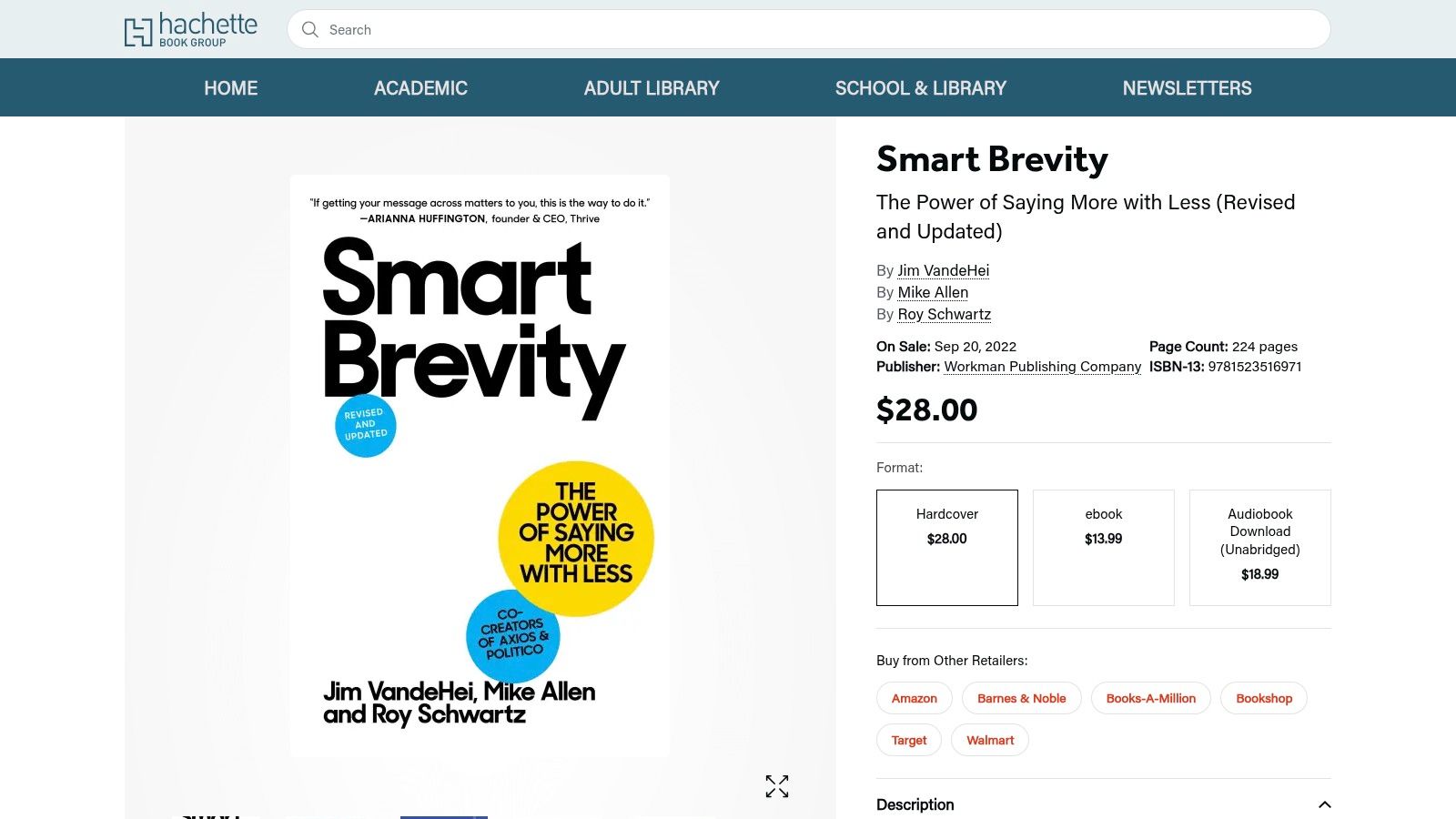
You can say the right words and still look unconvinced by them.
That's why Power Cues matters. Nick Morgan translates nonverbal leadership signals into concrete behaviors around voice, gesture, congruence, and interpersonal impact. If your message is strong but your delivery feels flat, apologetic, rushed, or physically uncertain, this book addresses the layer many smart professionals ignore.
The hidden layer of credibility
Executive audiences read more than wording. They watch pacing, vocal energy, stillness, gesture control, and whether your body supports your message or contradicts it.
Morgan is useful because he makes this actionable rather than mystical. He helps readers notice specific signals they're sending, especially in presentations and group settings.
A few places where the book tends to help fast:
- Vocal authority: Sounding steadier and less tentative.
- Physical congruence: Aligning posture and gesture with the message.
- Warmth plus authority: Avoiding the false choice between likable and credible.
Senior presence is often judged before anyone has fully processed your argument.
The main caveat is age. The book was published in 2014, so readers need to adapt some ideas to today's virtual and hybrid norms. Camera framing, eye contact on video, and on-screen energy work differently than in a conference room.
Still, this remains one of the better books for the nonverbal side of executive communication. If people tell you to “be more confident” but can't explain what that should look or sound like, this book gets closer to the answer.
9. HBR Guide to Persuasive Presentations by Nancy Duarte
Nancy Duarte is one of the safest recommendations I give to professionals who need quick improvements in executive presentations without reading a massive design book.
This guide is concise, skimmable, and practical. It helps you strengthen story arc, improve visual hierarchy, and deliver with more confidence. If your slides are cluttered, your narrative meanders, or your presentation feels informational rather than persuasive, this is a smart correction.
Best used before your next major presentation
Unlike some broader titles, this one works well under deadline. You can read sections selectively and apply them immediately to an upcoming deck or talk.
It's particularly helpful for:
- Slide simplification: Cleaner visuals and stronger message hierarchy.
- Executive storytelling: Better flow from setup to recommendation.
- Delivery preparation: Useful advice for difficult rooms and presentation nerves.
For readers who need support beyond the book, Intonetic offers executive presentation skills training, which fits naturally after you've worked through Duarte's core ideas.
The limitation is scope. This isn't a deep textbook on visual communication or persuasion science. It's a compact operating guide. That's exactly why many busy leaders will finish it.
If your career progression depends on board updates, investor briefings, strategy reviews, or cross-functional presentations, this is one of the most practical executive communication books to keep within reach. It won't replace structural thinking or pressure handling, but it will make your formal presentations sharper very quickly.
Executive Communication, 9-Book Comparison
| Title | Core Focus ✨ | Best For 👥 | Quality ★ | Unique Strength 🏆 | Value 💰 |
|---|---|---|---|---|---|
| Executive Presence (Original & 2.0), Sylvia Ann Hewlett | Research-driven pillars (gravitas, communication, appearance); virtual & DEI updates | Senior leaders; international professionals | ★★★★ | Evidence-based diagnostics to close presence gaps | 💰 $ (deep, enterprise-focused) |
| The Pyramid Principle (3rd ed.), Barbara Minto | MECE top-down structuring; templates for exec summaries & decks | Consultants, finance, product leaders | ★★★★★ | Transforms clarity and exec-ready storylines | 💰 $–$$ (textbook/practical ROI) |
| Simply Said, Jay Sullivan | Audience-first messaging; templates for meetings, emails, presentations | Managers & non-native English leaders | ★★★★ | Highly actionable, plain-language templates | 💰 $ (accessible, practice-ready) |
| Think Faster, Talk Smarter, Matt Abrahams | Six-step method for impromptu speaking; anxiety tactics | Professionals in high-pressure unscripted moments | ★★★★ | Practical in-the-moment tactics to buy time | 💰 $ (concise playbook) |
| Crucial Conversations (3rd ed.) | Managing high-stakes dialogue; digital & remote updates | Leaders, HR, negotiators, people managers | ★★★★★ | Enterprise-proven toolkit for constructive conflict | 💰 $ (high-impact, widely adopted) |
| Smart Brevity, VandeHei, Allen, Schwartz | Scannable formats for emails, memos, exec updates | Execs and comms teams focused on concise writing | ★★★★ | Clears exec attention with repeatable formats | 💰 $ (writing-first, time-efficient) |
| Brief, Joseph McCormack | BRIEF method; checklists & visual compression for messages | Busy leaders needing short briefings & updates | ★★★★ | Strong checklists + visual thinking for brevity | 💰 $ (practical, immediately usable) |
| Power Cues, Nick Morgan | Nonverbal signals: voice, gesture, presence for leaders | Presenters, senior leaders on video/in-person | ★★★★ | Actionable vocal & body-language techniques | 💰 $ (timeless, practical) |
| HBR Guide to Persuasive Presentations, Nancy Duarte | Story arc, slide hierarchy, delivery tips for exec rooms | Exec presenters and deck-builders | ★★★★ | Skimmable HBR playbook for quick deck upgrades | 💰 $ (concise reference) |
Turn Knowledge Into Action: Assess Your Communication Now
A good reading list can change how you think. It doesn't automatically change how you show up.
That's the central challenge with executive communication. Most professionals already know more than they're currently expressing. The issue isn't access to information. It's diagnosis and execution. You need to know where your authority is leaking. Is it your structure, your pace, your vocal delivery, your slide logic, your brevity, your answer handling, or the way you react under pressure?
That's why I'd treat this list as a curriculum, not a bookshelf. Start with Hewlett if you need the big picture on credibility. Move to Minto if your thinking is strong but your structure is weak. Pick Sullivan if you want broad workplace application. Choose Abrahams if pressure breaks your fluency. Use Crucial Conversations if conflict changes your tone. Add Smart Brevity and Brief if you overexplain in writing or meetings. Bring in Morgan for nonverbal authority. Finish with Duarte when presentations are the visible arena that matters most.
There's also a practical reason to be selective. Not every communication problem should be solved by reading another general leadership book. Many professionals need targeted help because their challenge is specific. They don't need more theory on confidence. They need to shorten answers, lower vocal strain, stop burying recommendations, or handle senior pushback without losing clarity.
That's where a diagnostic becomes more valuable than another broad resource. The fastest progress usually starts when you can identify the exact habit that lowers your perceived seniority. Once you can see that pattern clearly, the right book becomes obvious, and practice becomes more efficient.
If you want an objective baseline, start with Intonetic's free Executive Communication Assessment. It's a practical first step for spotting the communication habits that may be undermining your authority in meetings, presentations, and high-stakes conversations. If you later want more structured support, Intonetic also offers The Gravitas Method, a 12-week one-on-one executive presence coaching program for international professionals who want to communicate with more authority and influence at senior levels. It's coached by Nikola and covers vocal authority, strategic framing, executive body language, and high-stakes communication. The program is priced at $8,200 paid in full or $9,000 across three installments.
The broader point is simple. Don't just collect executive communication books. Use them to solve the next visible communication problem in your career. That's how reading turns into promotion-ready presence.
For professionals who also care about tone and readability in modern communication workflows, it's worth reflecting on strategies for human-like AI when drafting messages that still need to sound like clear human leadership.
If you're ready to go beyond reading and identify what's specifically holding back your authority, start with Intonetic's free Executive Communication Assessment. It's the clearest entry point if you want to understand your current baseline, prioritize the right skill gaps, and decide whether self-study or structured coaching is the better next step.