
Master the Art of Eye Contact: Boost Your Executive Presence
The art of eye contact is a powerful skill. It’s not about staring someone down, but about creating brief, meaningful connections that build trust and project confidence. It's the secret ingredient that transforms a simple conversation into a moment of genuine influence.
How Eye Contact Shapes Leadership and Influence
What if you could command a room before you even said a single word? That’s the real power of strategic eye contact. This isn't just a "soft skill"—a confident, steady gaze is a critical tool for any leader who wants to inspire action and build trust.

Think of your eye contact as the silent framework holding up your verbal message. When you hold someone's gaze, you're sending a clear, non-verbal signal: "I am present, I believe in what I am saying, and you have my undivided attention." This simple act has a profound impact on your audience.
Building Trust and Psychological Safety
A leader’s ability to offer a calm, reassuring gaze directly shapes the team’s entire dynamic. When you consistently meet people’s eyes, you create an environment of psychological safety where they feel comfortable enough to speak up, share ideas, and even challenge the status quo. It’s a powerful signal of openness and respect.
For ambitious professionals, especially those working in international environments, mastering this skill is non-negotiable. When you’re navigating high-stakes situations like a board meeting or an investor pitch, your non-verbal cues can easily be the deciding factor.
Mastering the art of eye contact can dramatically accelerate your career by establishing credibility from the moment you enter a room. It is a foundational element of executive presence, creating a powerful first impression that precedes any spoken word.
This one skill is what separates passive participants from true leaders. It proves you’re not just physically in the room, but fully engaged with the people and the conversation happening around you. For anyone aspiring to lead, learning to use your eyes effectively is an absolute must.
An essential first step is to understand your current communication patterns, which can be uncovered with professional executive presence coaching. By intentionally practicing and refining your gaze, you build a reputation as an authentic, trustworthy, and authoritative figure—the exact qualities every senior leader needs.
Using Eye Contact to Make Your Message Memorable
Beyond just looking confident, the way you use your eyes serves another, more powerful purpose: it helps your ideas stick. When you hold a stakeholder’s gaze while delivering a key point, you're doing more than being polite. You're using a subtle psychological tool to sear that point into their memory.
Think of your eyes as a spotlight. They signal to the listener's brain, "Pay attention—this part is important." This simple, non-verbal cue triggers a deeper level of cognitive processing, helping move your ideas from a listener's short-term awareness into their long-term memory.
The Science Behind a Lasting Gaze
This isn’t just a feeling; it’s backed by compelling data. Eye contact is a powerful memory booster, which is an incredible advantage for any professional trying to make an impact under pressure.
Research shows that achieving just 30% direct gaze during a conversation can significantly increase what your audience remembers. In one study, people who maintained eye contact retained over 20% more details than those who looked away. For international professionals, this effect is even more pronounced. Good eye contact can make you seem 40% more confident, helping bridge any linguistic gaps and build immediate trust.
This boost in recall works both ways. It means your stakeholders will remember your pitch more vividly, which is a game-changer whether you're a product manager negotiating with the C-suite or a consultant trying to close a high-value deal.
Finding Your Balance with The 50/70 Rule
But more isn't always better. Staring intensely can make people uncomfortable, while too little eye contact can make you seem untrustworthy or disengaged. The sweet spot is a balance that builds rapport without feeling forced.
A fantastic guideline for this is the 50/70 Rule, a simple framework I teach my clients for calibrating their gaze in professional settings.
Here is a practical breakdown of how you can apply this rule to feel more natural and effective in your conversations.
Applying The 50/70 Rule for Effective Eye Contact
| Scenario | Recommended Eye Contact | Objective |
|---|---|---|
| When you are speaking | Maintain eye contact 50% of the time | To hold your listener's attention on key points while allowing yourself natural breaks to gather your thoughts. This prevents you from appearing too intense. |
| When you are listening | Maintain eye contact 70% of the time | To show you are actively listening, engaged, and receptive to the speaker's message. This builds significant rapport and demonstrates respect. |
This simple rule gives you a solid foundation, but remember, the goal is always a natural, comfortable exchange. It's a guideline, not a rigid performance.
For international professionals, combining strong eye contact with clear articulation is an incredibly powerful combination. Once you master this balance, you'll find that your message is not just heard, but truly remembered and valued. If you're looking to amplify your presence even further, you can learn more about how to improve English pronunciation for public speaking.
The Three-Second Rule for Powerful Connections
Most people think powerful eye contact means an intense, unwavering stare. They’re wrong. The real power of a shared look comes from its brevity and intention, turning a fleeting moment into a genuine point of connection. It’s the very fact that we don’t lock eyes constantly that makes it so potent when we do.
Fascinating new findings from McGill University back this up. In typical conversations, researchers found people spent only 12% of their time in mutual face-gazing, and true eye-to-eye contact happened a mere 3.5% of the time. You can dig into how this rarity creates such an impact by reading the full study summary on social behavior.
Why Scarcity Creates Value
This scarcity means that every time you do make direct eye contact, it carries immense weight. The study discovered these brief moments were pivotal, strongly predicting positive outcomes like a greater willingness to collaborate. When you learn to create these moments intentionally, you’re using a powerful tool that most people completely overlook.
This is where a simple, practical guideline becomes invaluable, especially for international professionals who need a reliable framework that works across cultures. I call it the "Three-Second Rule," and it’s your key to unlocking this power without ever making someone feel scrutinized.
The goal is not to stare but to connect. Hold a person’s gaze for just three to five seconds—long enough to acknowledge them and signal confidence, but brief enough to feel natural and respectful.
This duration is the sweet spot. It's just long enough for the other person’s brain to register the connection and associate you with confidence and presence. In a professional setting like a board meeting, a gaze held for this length can boost engagement ratings by as much as 25%.
Fostering Deeper Professional Bonds
Think of it as a series of short, meaningful handshakes with your eyes. Each three-to-five-second connection builds a layer of trust and rapport, making your words land with greater impact. It sends a clear message that you see the other person as an individual, not just another face in the crowd.
Beyond making your message memorable, this practice is essential for fostering meaningful interactions and learning how to build real connections with your colleagues and stakeholders.
By mastering these brief, intentional moments, you shift from simply talking at people to truly communicating with them. This calibrated approach demonstrates high social awareness and is a cornerstone of advanced executive presence.
How to Calibrate Your Gaze for Any Situation
Mastering the art of eye contact isn’t about a single, rigid rule. It's about adaptability. The kind of gaze that builds fantastic rapport in a one-on-one meeting will feel weak and ineffective in a large conference hall. The most effective leaders I've worked with instinctively know how to calibrate their look to fit the context, whether they're in a New York boardroom or on a Zoom call with their team in Tokyo.
This isn’t just about looking at people; it’s about creating a connection. It’s a refined technique that amplifies your influence.
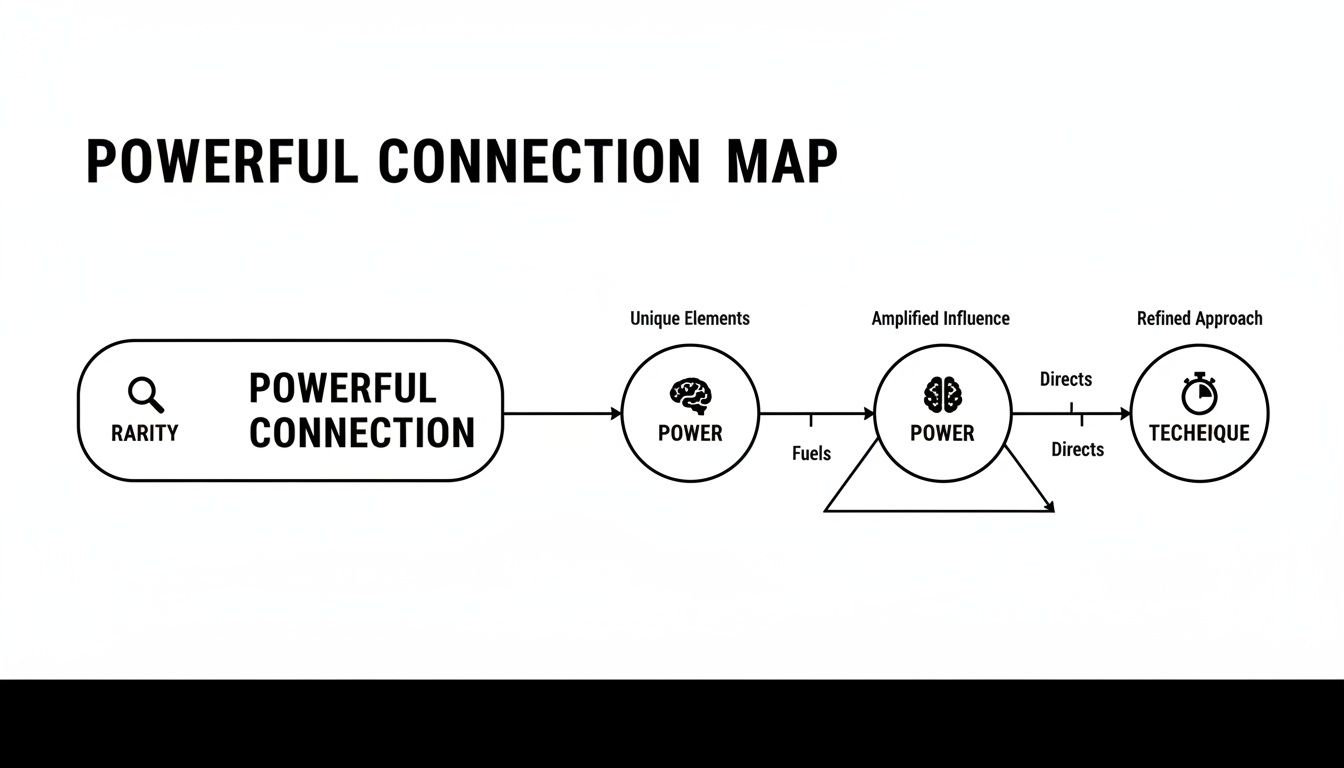
The real power of your gaze comes from its intentional application. It’s about turning a simple, fleeting moment into a meaningful connection that makes others feel seen and heard.
Calibrating for In-Person Interactions
In-person meetings give you a rich palette of non-verbal cues to build trust, but your approach has to change based on the room.
-
One-on-One Meetings: This is your best chance to build strong rapport. A good guideline is the 50/70 rule: maintain eye contact about 50% of the time when you're speaking and 70% when you're listening. This balance shows you're engaged without making the other person feel like they're under a microscope.
-
Small Group Presentations: The biggest mistake here is locking onto one person. Instead, use what I call “gaze panning.” Rest your gaze on one person for about 3-5 seconds—just long enough to complete a thought or a sentence. Then, smoothly move to another person for your next point. This makes each individual feel like you're speaking directly to them.
-
Large Conferences: You simply can't make eye contact with everyone, and trying will just make you look frantic. The trick is to divide the room into sections—left, center, and right. Spend a part of your presentation addressing each section, making sure to land your gaze on a few specific individuals within those zones. This creates the feeling of a personal connection, even in a huge auditorium.
Mastering Eye Contact in Virtual Meetings
On a video call, the rules of engagement are completely different. Your audience isn't in the room; they're on the other side of a tiny camera lens.
To create a genuine connection, you have to train yourself to look directly at the camera, not at the faces on your screen. It feels unnatural at first, but it’s the only way to simulate direct eye contact for everyone else on the call.
When you speak, focus your gaze on that little green or black dot. It makes you appear far more confident and engaged. When you’re listening, it’s fine to look at the screen to read others’ reactions, but make sure you periodically bring your gaze back to the camera to maintain that crucial connection. Honing this skill is a huge differentiator for leaders, and it's one of the top reasons to choose Intonetic for business leaders who want to command a stronger on-screen presence.
To help you put this all together, here’s a quick guide to adapting your technique for different professional settings.
Eye Contact Techniques for Different Scenarios
This table breaks down how to adjust your gaze for maximum impact, whether you're on a video call or in a physical boardroom.
| Scenario | Technique | Desired Outcome |
|---|---|---|
| Virtual Meeting | Look at the camera when speaking, screen when listening. | Project confidence and direct engagement for all participants. |
| One-on-One Meeting | The 50/70 Rule: 50% eye contact when speaking, 70% when listening. | Build strong rapport and trust without causing discomfort. |
| Small Group Presentation | Gaze Panning: Hold gaze for 3-5 seconds per person, moving smoothly. | Make each person feel seen and included. |
| Large Conference | Sectioning: Divide the room and address each section sequentially. | Create a sense of connection and engagement in a large space. |
| Cross-Cultural Meeting | Observe & Adapt: Start with a neutral 3-5 second gaze, then mirror senior leaders. | Show cultural awareness and build respect. |
By practicing these specific techniques, you move from simply "making eye contact" to strategically using your gaze to build influence and trust in any situation.
Navigating Cross-Cultural Norms
Great leaders are also culturally intelligent. Instead of falling back on stereotypes about eye contact, I teach clients to use an "observe and adapt" framework.
When you're in a new cultural setting, start with a moderate, respectful approach, like the 3-5 second rule. Then, pay close attention to how senior leaders in that room use their gaze. Do they hold it for longer? Is it more fleeting? Subtly mirror their behavior. This isn't about mimicry; it's about demonstrating awareness and respect for their norms.
For international professionals, building this adaptable toolkit is fundamental. It's a core component of The Gravitas Method, which is a 12-week one-on-one executive presence coaching program for international professionals who want to communicate with more authority and influence at senior levels. The program is priced at $8,200 paid in full or $9,000 across three installments. Coached by Nikola, it covers vocal authority, strategic framing, executive body language, and high-stakes communication.
Practical Drills to Build Unshakeable Eye Contact
Knowing the theory behind powerful eye contact is one thing. Actually doing it under pressure is something else entirely. Real confidence doesn't come from reading about it; it comes from practice—moving the skill from a place of awkward, conscious effort to something you do naturally without even thinking about it.

The goal here isn't to turn you into a robot who stares without blinking. It's to make a strong, steady gaze feel authentic and become a natural part of your communication toolkit. These simple drills will help you get there.
Start with Low-Stakes Practice
You wouldn't try a brand-new presentation for the first time in front of the CEO. The same principle applies here. You need to build your comfort level where the pressure is off, allowing you to focus on the mechanics without the anxiety of a high-stakes meeting.
-
The Mirror Drill: Stand in front of a mirror and just talk. Pick any topic—what you did today, a project you're working on—and speak for a few minutes. Your only goal is to maintain eye contact with your own reflection. Get comfortable seeing a confident, engaged person looking back at you.
-
The Recorder Drill: Now, do the same thing, but record yourself on your phone. When you watch it back, you get objective feedback. Do you look away when you're searching for a word? Does your gaze seem to disconnect when you feel uncertain? This is how you spot the exact moments where your confidence wavers.
Great eye contact isn’t just about the eyes; it’s about creating a cohesive executive presence. Your gaze should align with your vocal tone and posture, sending a single, powerful message of authority and confidence.
For more on how to use recordings for feedback, you can check out our guide on using visual aids and mirror exercises for communication improvement.
Build Resilience in Public
Once you're comfortable holding your own gaze, it’s time to take it into the real world. The key is to start with tiny, low-pressure interactions that build your tolerance for what might initially feel awkward.
The Passerby Drill is perfect for this.
- Acknowledge and Hold: As you walk down an office hallway, a quiet street, or through a coffee shop, briefly make eye contact with people you pass.
- Add a Nod or Smile: Hold their gaze for just a second—no more—and offer a small, polite nod or a quick, closed-mouth smile.
- Observe and Move On: That's it. The interaction is over in an instant. You're not trying to start a conversation; you're just normalizing the act of initiating a brief, non-verbal connection.
This simple exercise retrains your brain to see eye contact not as a confrontation, but as a normal, positive part of moving through the world. With a little repetition, what once felt intimidating becomes second nature, building the foundation for that unshakeable presence when you're in the rooms where it really counts.
Your Path to Commanding Presence
So, where do we go from here? The most important thing to remember is that commanding eye contact isn't some gift you’re born with. It’s a skill, plain and simple. And its real power doesn't come from staring intensely, but from knowing precisely when and how to use your gaze to build trust and project authority.
Think of it as a journey of fine-tuning. This isn’t just about what you do in the room; it extends to your entire professional brand. In fact, a powerful professional image often starts before you even speak—a modern guide to headshots shows how to capture that same confidence in a visual format.
From Insight to Action
In the professional world, getting eye contact right can be the deciding factor in how your leadership is perceived. A fascinating Harvard Business School study found that when leaders made a point to look directly at their team members, it boosted psychological safety and made people more willing to speak up.
It’s not just about feelings, either. This translates to real-world results. In 2022 surveys, a staggering 68% of executives said that strong eye contact was a key factor in closing deals and securing promotions. You can find more on the importance of eye contact in communication if you want to dig deeper.
This is where you turn what you’ve learned into an instinct. It’s the non-verbal signal that says you’re present, you're confident, and you’re the one leading the conversation.
Your next step is to move from just knowing this to truly embodying it. This is about making authority feel like a natural extension of who you are, not a part you're playing.
If you're serious about fast-tracking your path to senior leadership, it’s time to get out of the textbook and into the real world. This is how you start owning every room you enter.
Take our free Executive Communication Assessment and get a personalized breakdown of your current communication style. You’ll see exactly where the gaps are and get a clear, actionable plan to start communicating with the authority of a seasoned leader. This assessment is your first real step toward developing true executive influence.
FAQ: Mastering Eye Contact in the Workplace
As you work on mastering the art of eye contact, specific questions are bound to pop up. Here are my answers to some of the most common concerns I hear from professionals looking to develop a more powerful and confident gaze.
How Long Should I Hold Eye Contact in a Professional Meeting?
Aim for a comfortable 3-5 seconds at a time. The real goal here is connection, not a staring contest. If you're in a group meeting, let your gaze pan from one person to another, giving each a brief, focused moment of your attention.
This "gaze panning" technique is fantastic because it makes everyone in the room feel seen and included, all while projecting your own confidence. Holding on for too long can feel aggressive, but quick, darting glances can make you seem nervous or even untrustworthy.
I Feel Anxious Making Eye Contact. How Can I Overcome This?
Start small and practice in low-stakes situations where the pressure is off. One of the best first steps is simply to practice with a mirror. It sounds a bit strange, but it helps you get comfortable seeing your own focused gaze.
From there, try making brief eye contact with service staff when you order coffee or with people you pass on the street. In a meeting, you can start by looking at the bridge of a person's nose. From a distance, they'll never notice the difference. The key is gradual, consistent exposure—that's how you build real confidence.
How Do I Make Effective Eye Contact on a Video Call?
The secret to powerful virtual eye contact is to look directly at your computer's camera lens, not at the faces on your screen. When you look at the camera, it appears to everyone else on the call that you are looking right at them, creating a strong sense of direct connection.
Use this technique when you're speaking to make your points land with more impact. When you're listening, it's perfectly fine to look at the screen to read others' reactions. Just remember to bring your gaze back to the camera periodically to maintain that crucial connection. For more answers to common questions, you can also check out our FAQs on executive communication.
Are There Cultural Differences in Eye Contact I Should Know?
Absolutely. Cultural norms around eye contact vary significantly, and being unaware of them can lead to miscommunication. In many Western cultures, for instance, direct eye contact is a sign of honesty and confidence. However, in some East Asian and Middle Eastern cultures, holding a superior's gaze for too long can be interpreted as disrespectful or challenging.
The best approach is to start with a moderate, respectful method (like the 3-5 second rule) and then observe and adapt. Watch how senior leaders in that specific context use their gaze and subtly mirror their behavior. This shows you're paying attention and have a high degree of cultural awareness.
Ready to turn these insights into ingrained skills? The first step to commanding a stronger presence is understanding your unique communication style. At Intonetic, we guide ambitious professionals to communicate with the authority of a senior leader.
Take our free Executive Communication Assessment to get a personalized analysis of your strengths and discover the key areas you can develop to accelerate your career.