
List of Diphthongs: Your Essential Guide to Clear English – list of diphthongs
Mastering the rhythm and melody of American English often comes down to mastering its vowel sounds, but not just the simple, static ones. The key to unlocking a more natural, fluent, and clear accent lies in a specific type of vowel: the diphthong. These are often called “gliding vowels” because they involve a smooth movement from one vowel position to another within a single syllable, like the sound in oil or out. Unlike a monophthong (a pure, single vowel like the ‘a’ in “cat”), a diphthong is a dynamic sound that adds a crucial layer of character to English pronunciation.
For non-native speakers, particularly professionals in client-facing roles, failing to produce these sounds correctly can lead to miscommunication and require listeners to exert extra effort. For instance, pronouncing the word “road” with a single vowel sound might make it sound more like “rod,” changing the meaning entirely. This is a common challenge that can subtly undermine a speaker’s confidence and authority. Getting these sounds right is not just about sounding more “native”; it’s about achieving crystal-clear intelligibility.
This comprehensive list of diphthongs is designed to provide a clear, actionable roadmap to mastering these essential sounds. We will break down the eight most impactful diphthongs in American English, providing you with:
- IPA symbols and keyword examples for easy identification.
- Minimal pairs to help you distinguish between similar sounds.
- Targeted practice drills and phrasing exercises to build muscle memory.
- Guidance on prioritization, so you can focus on the sounds that will make the biggest immediate impact on your clarity.
Our approach focuses on high-return-on-investment sounds, ensuring you spend your practice time on what truly matters for clear and confident communication.
1. /aɪ/ – Price Diphthong
The /aɪ/ diphthong, often called the “Price” diphthong, is one of the most fundamental and frequently used sounds in American English. It is a gliding vowel that starts with the open, unrounded sound /a/ (similar to the vowel in “hot” or “father”) and moves smoothly toward the higher, front vowel /ɪ/ (as in “pit”). This glide is what defines it as a diphthong, creating a single, fluid sound rather than two separate vowels.
This sound is essential for clear communication, appearing in many high-frequency words. Mastering its pronunciation is a high-priority goal for professionals aiming for a standard American accent, as mispronouncing it can lead to significant misunderstandings. It’s a cornerstone of any comprehensive list of diphthongs due to its prevalence.
Pronunciation Breakdown and Common Challenges
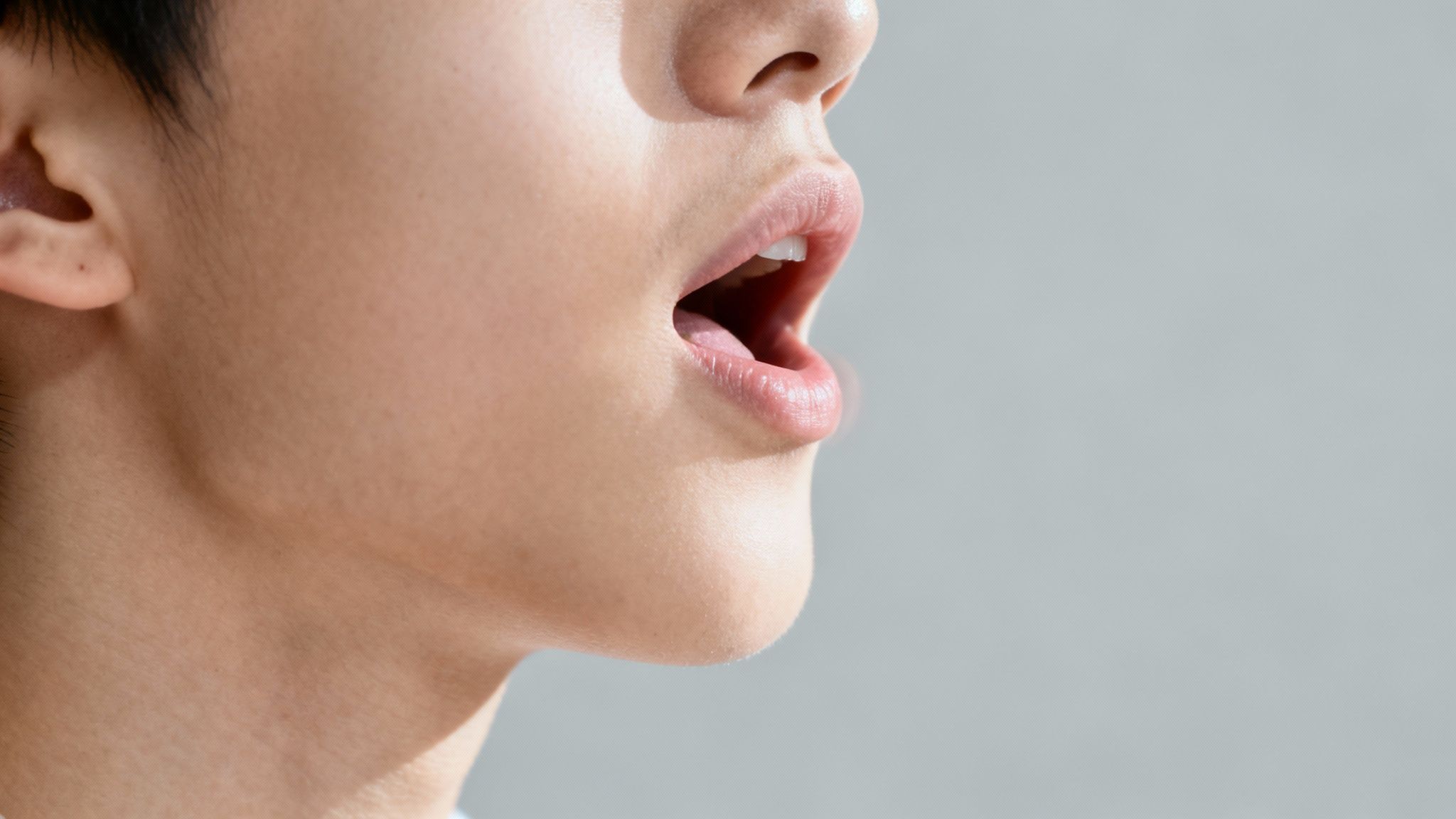
To produce the /aɪ/ sound correctly, begin with your jaw dropped and tongue low and flat in your mouth for the /a/ sound. Then, without pausing, glide your tongue and jaw upward and forward to the position for /ɪ/. The key is a smooth, connected movement.
Many non-native speakers face a common challenge: shortening the sound. This often results in pronouncing /aɪ/ as a monophthong, like the short vowel /i/ in “bit” or /ɛ/ in “bet.” For instance, “rice” might sound more like “riss.” Another issue is not opening the jaw enough for the initial /a/ sound, making “my” sound closer to “me.”
Quick Tip: The initial position for /aɪ/ requires a wide jaw opening. Imagine a doctor asking you to say “Ahh.” Start there, then smoothly raise your jaw to finish the sound.
Actionable Practice Drills
Integrate these exercises into your daily practice to build muscle memory and master the /aɪ/ sound.
- Minimal Pairs: Contrast
/aɪ/with the short vowel/ɪ/. Repeat these pairs aloud, exaggerating the jaw movement for/aɪ/:- bite / bit
- ride / rid
- sign / sin
- lime / lim
- Phrase Repetition: Practice the diphthong within common phrases to improve flow and naturalness.
- “I might try.”
- “It’s about time.”
- “Why fly at night?”
- “A nice price.”
- Sentence Reading: Read the following sentences, focusing on a clear and deliberate glide for each
/aɪ/sound.- I like to drive my bike at night.
- The bright light in the sky is shining.
Consistent practice with these targeted drills will help solidify this crucial diphthong in your speech. For a deeper understanding of phonetic symbols like /aɪ/, you can explore how to improve your English pronunciation with IPA.
2. /aʊ/ – Mouth Diphthong
The /aʊ/ diphthong, commonly referred to as the “Mouth” diphthong, is a prominent sound in American English that involves a noticeable change in lip shape. This gliding vowel begins with the open-back unrounded vowel /a/ (similar to the sound in “hot”) and moves toward the high-back rounded vowel /ʊ/ (as in “put”). This journey from an open, unrounded mouth position to a rounded one creates the distinct, full sound heard in words like “now” and “house.”

This diphthong is crucial for intelligibility and is frequently found in common vocabulary, especially in words spelled with ‘ou’ and ‘ow’. For professionals aiming for clear and standard American pronunciation, mastering the /aʊ/ sound is essential, as it significantly impacts how listeners perceive their fluency and clarity. Its high frequency makes it a key component in any complete list of diphthongs.
Pronunciation Breakdown and Common Challenges
To correctly produce the /aʊ/ sound, start with your jaw dropped and tongue low for the initial /a/ sound, similar to the start of the /aɪ/ diphthong. From there, smoothly glide your tongue up and back while rounding your lips to form the /ʊ/ sound. The movement should be continuous, with the lip rounding occurring progressively through the sound.
A frequent error for non-native speakers is to flatten the sound into a monophthong, making “town” sound like “tan” or “down” sound like “dan.” Another common issue is substituting it with a different vowel, such as /oʊ/, causing “house” to be misheard as “hose.” This often happens when the lips are not rounded sufficiently at the end of the glide.
Quick Tip: Focus on the ending lip shape. Your lips should be in a small, rounded ‘O’ shape by the end of the sound. Practice saying “ow” and hold the final sound, checking your lip position in a mirror.
Actionable Practice Drills
Use these targeted exercises to develop the muscle memory needed for a consistent and accurate /aʊ/ sound.
- Minimal Pairs: Practice distinguishing
/aʊ/from other vowels, particularly/oʊ/and/æ/. Exaggerate the jaw drop and lip rounding.- house / has
- brown / bran
- down / damn
- now / nan
- Phrase Repetition: Integrate the diphthong into short, common phrases to practice its natural flow in connected speech.
- “How now brown cow?”
- “Around the house.”
- “Found it downtown.”
- “A loud sound.”
- Sentence Reading: Read these sentences aloud, concentrating on a clear, fluid glide for every
/aʊ/sound.- We found our cow about a mile south of the house.
- The crowd was loud when he took a bow.
Consistent practice with these drills will help solidify this fundamental diphthong, making your American English pronunciation sound more natural and clear.
3. /ɔɪ/ – Choice Diphthong
The /ɔɪ/ diphthong, commonly known as the “Choice” diphthong, is a distinct gliding vowel found in American English. This sound begins with the open-mid back vowel /ɔ/ (similar to the vowel in “law” or “thought”) and glides smoothly toward the high front vowel /ɪ/ (as in “pit”). This forward movement of the tongue, combined with a change in lip shape from rounded to unrounded, creates the single, fluid sound characteristic of words like “boy” and “voice.”

This diphthong is easily identified by its common spellings, “oi” and “oy,” making it relatively straightforward to spot. For professionals aiming for clear and standard American pronunciation, mastering the /ɔɪ/ sound is crucial for avoiding confusion and articulating with precision. Its unique quality makes it an essential part of any complete list of diphthongs.
Pronunciation Breakdown and Common Challenges
To produce the /ɔɪ/ sound correctly, start with your lips rounded and your jaw slightly lowered for the initial /ɔ/ vowel. Your tongue should be low and pulled back in your mouth. From this position, glide your tongue upward and forward toward the /ɪ/ position while unrounding your lips. The entire movement should be seamless.
A frequent challenge for non-native speakers is substituting this diphthong with a monophthong, such as a simple /o/ or /ɔ/. For instance, the word “boy” might be pronounced as “boh.” Another common error is separating the two vowel sounds (/ɔ/ and /ɪ/) instead of gliding between them, which disrupts the natural flow of speech.
Quick Tip: Think of the sound as a journey. Start with your lips rounded for the “aw” sound in “law,” then glide forward and smile slightly as you move to the “ih” sound in “pit.” The key is the smooth transition.
Actionable Practice Drills
Incorporate these exercises into your routine to develop the muscle memory needed for a natural-sounding /ɔɪ/ diphthong.
- Minimal Pairs: Contrast
/ɔɪ/with the monophthong/oʊ/(as in “boat”) to sharpen your auditory distinction. Repeat these pairs aloud, focusing on the forward glide of/ɔɪ/:- boy / boat
- coil / coal
- toyed / toad
- joined / Joan
- Phrase Repetition: Practice the diphthong in common phrases to build fluency and improve its integration into natural speech.
- “The boy‘s toy.”
- “A point of voice.”
- “Avoid the noise.”
- “Join the coin club.”
- Sentence Reading: Read the following sentences, paying close attention to producing a clear and connected glide for each
/ɔɪ/sound.- The boy was annoyed by the loud noise.
- She made a choice to join the employees.
Consistent work with these drills will help you master this important sound. For more targeted practice, you can discover how to use minimal pairs to correct your English pronunciation.
4. /eɪ/ – Face Diphthong
The /eɪ/ diphthong, commonly known as the “Face” diphthong, is a key vowel sound in American English, appearing in countless high-frequency words. It is a gliding vowel that begins with the mid, front vowel sound /e/ (similar to the vowel in “bet” or “red”) and moves smoothly toward the higher, front vowel /ɪ/ (as in “pit”). This fluid glide from a more open to a more closed mouth position creates its distinct diphthong quality.
Mastering the /eɪ/ sound is crucial for professionals seeking to enhance their clarity and be easily understood in a business context. Given its prevalence in words spelled with ‘a-e’, ‘ai’, ‘ay’, and ‘ei’, it’s an indispensable component of any comprehensive list of diphthongs. Mispronouncing it can make words like “make” sound like “meck” or “say” sound like “seh,” altering the intended meaning.
Pronunciation Breakdown and Common Challenges
To produce the /eɪ/ sound correctly, start with your tongue in a mid-high position in the front of your mouth for the /e/ sound. Your lips should be relaxed and unrounded. From there, glide your tongue slightly higher and forward to the /ɪ/ position, closing your jaw slightly. The movement should be continuous and smooth, not two separate sounds.
A common challenge for non-native speakers is monophthongization, where the glide is omitted, and the sound is pronounced as a pure vowel, like /e/. This makes “late” sound like “let.” Another issue is tensing the lips or rounding them, which can distort the sound. The key is to keep the lips relaxed and focus on the internal tongue and jaw movement.
Quick Tip: To feel the glide, say the word “day” very slowly. You should feel your tongue and jaw rise slightly toward the end of the vowel. It’s a subtle but critical movement.
Actionable Practice Drills
Incorporate these targeted exercises into your practice routine to build the necessary muscle memory for a natural-sounding /eɪ/.
- Minimal Pairs: Contrast
/eɪ/with the short vowel/ɛ/. Repeat these pairs, focusing on the gliding motion for/eɪ/:- late / let
- pain / pen
- wait / wet
- sail / sell
- Phrase Repetition: Practice the diphthong in common phrases to build fluency and natural rhythm.
- “Days of the week.”
- “Make a statement.”
- “The rain in Spain.”
- “Play the game.”
- Sentence Reading: Read these sentences aloud, ensuring each
/eɪ/sound is produced with a clear, deliberate glide.- They plan to take the same train today.
- The great wave came late in the day.
Consistent practice is fundamental to mastering this sound. For a broader overview of sounds like this one, explore how to pronounce the 44 sounds in English.
5. /oʊ/ – Goat Diphthong
The /oʊ/ diphthong, commonly known as the “Goat” diphthong, is a defining sound in American English, especially distinguishing it from other English accents. This gliding vowel begins with the mid, back, rounded vowel /o/ (similar to the start of “all” but more rounded) and moves toward the higher, back, rounded vowel /ʊ/ (as in “put”). The sound is produced with a smooth, continuous glide, creating a single, elongated vowel sound.
This diphthong is crucial for professionals who want to sound clear and natural, as it appears in many common words like “go,” “home,” and “know.” Its correct production is a key marker of a standard American accent, making it a high-priority sound in any comprehensive list of diphthongs. Mastering this sound prevents speech from sounding flat or foreign.
Pronunciation Breakdown and Common Challenges
To produce the /oʊ/ sound correctly, start with your lips rounded and your tongue positioned toward the back-middle of your mouth for the /o/. Without pausing, glide your tongue slightly upward and further back while closing your lips into a tighter circle for the /ʊ/. The movement should be fluid, not two distinct sounds.
A primary challenge for non-native speakers is monophthongization, or pronouncing /oʊ/ as a single, pure vowel like /o/. This can make “boat” sound like “bought” or “coat” sound like “caught.” Another common error is insufficient lip rounding, which can flatten the sound and make it difficult for listeners to understand.
Quick Tip: Focus on the ending position. Your lips should finish in a small, tight circle, as if you were about to whistle. This ensures you complete the full gliding motion of the diphthong.
Actionable Practice Drills
Incorporate these targeted exercises into your daily routine to develop the muscle memory needed for a natural-sounding /oʊ/.
- Minimal Pairs: Contrast
/oʊ/with the monophthong/ɔ/(as in “law”). Focus on the gliding movement and lip rounding for/oʊ/:- coat / caught
- boat / bought
- so / saw
- note / naught
- Phrase Repetition: Practice the diphthong in common phrases to build fluency and natural rhythm.
- “I don’t know.”
- “Go slowly.”
- “Show me the road home.”
- “An old boat.”
- Sentence Reading: Read these sentences aloud, paying close attention to producing a clear, rounded glide for each
/oʊ/sound.- Joe told a joke on the phone.
- He rode his bike home alone.
Consistent practice is key to mastering the nuances of this sound, which will significantly improve how you connect words in conversation. For a deeper dive into how sounds like /oʊ/ change in natural speech, you can explore guides on connected speech in American English.
6. /ɪə/ – Deer Diphthong
The /ɪə/ diphthong, often called the “Deer” diphthong, is a centering diphthong where the vowel glides from a higher front position to a central, more neutral one. It begins with the vowel /ɪ/ (as in “pit”) and moves toward the schwa sound /ə/ (the unstressed vowel in “about”). This sound is common in words spelled with ‘ear’, ‘eer’, or ‘ier’.
While prominent in British English (Received Pronunciation), its usage varies in American English. Many American speakers simplify this sound to a pure vowel followed by an ‘r’ sound, a process known as monophthongization. However, understanding /ɪə/ is still valuable for comprehensibility, especially when communicating with a global audience, and it remains a key entry in any complete list of diphthongs.
Pronunciation Breakdown and Common Challenges
To produce the /ɪə/ sound, start with your tongue high and forward in your mouth for the /ɪ/ sound, with your lips relaxed. From there, glide your tongue down and back toward the center of your mouth to produce the /ə/. The movement should be smooth and create a single, connected sound.
The primary challenge for learners, particularly those aiming for an American accent, is navigating the ‘r-coloring’. In American English, words like “hear” are often pronounced /hɪr/, where the /ɪ/ vowel is immediately followed by a strong ‘r’ sound. Confusing /ɪə/ with the pure vowel /iː/ (as in “heat”) is another common pitfall, causing “beer” to sound like “bee.”
Quick Tip: To create the glide, say the vowel in “pit” (
/ɪ/) and let your tongue relax down and back to a neutral position without pausing. The sound should feel like it’s “centering” in your mouth.
Actionable Practice Drills
Use these targeted exercises to distinguish /ɪə/ from similar sounds and build confidence in its production.
- Minimal Pairs: Contrast
/ɪə/with the pure vowels/e/and/iː/. Focus on the gliding motion of the diphthong.- cheer / chair
- beer / bee
- dear / day
- fear / fair
- Phrase Repetition: Practice using the diphthong in short, common phrases to improve its natural flow in connected speech.
- “Here and near.”
- “A clear idea.”
- “We’re all ears.”
- “A year of fear.”
- Sentence Reading: Read these sentences aloud, paying close attention to producing a clear glide for each
/ɪə/sound.- We hear the deer are very near.
- It’s not clear if the pioneer will appear this year.
Consistent practice with these drills will help clarify this sound, improving your pronunciation accuracy whether you’re aiming for an American or British accent.
7. /ʊə/ – Cure Diphthong
The /ʊə/ diphthong, often called the “Cure” diphthong, is a more nuanced sound in American English and is becoming less common in many dialects. It is a gliding vowel that begins with the near-close back rounded vowel /ʊ/ (as in “put” or “cook”) and moves toward the mid-central schwa sound /ə/ (the unstressed vowel in “sofa“). This glide creates a distinct sound found in specific spelling patterns.
While this diphthong is being replaced by the monophthong /ɔr/ (as in “for”) in many American accents, especially in words like “poor” and “sure,” it remains important for a comprehensive list of diphthongs. Recognizing and being able to produce it is useful for understanding various accents and for clear articulation in more conservative speech patterns, such as in acting or formal public speaking.
Pronunciation Breakdown and Common Challenges
To produce the /ʊə/ sound, start with your lips rounded and your tongue high and back in your mouth for the /ʊ/ sound. From there, relax your lips and allow your tongue to glide to a neutral, central position for the schwa /ə/. The movement should be fluid, blending the two sounds into one syllable.
The primary challenge for non-native speakers is the tendency to replace it with a simpler vowel. For example, “tour” might be pronounced like “tore” (/tɔr/) or even “too-er” with two distinct syllables. Another common issue is not starting with a sufficiently rounded lip position for the initial /ʊ/, which can make the sound difficult to distinguish from other vowels.
Quick Tip: Begin by making a clear /ʊ/ sound as in “book.” Hold that sound for a moment, then relax your mouth into the neutral “uh” sound (/ə/) without stopping the airflow.
Actionable Practice Drills
Use these targeted exercises to gain control over the /ʊə/ diphthong and integrate it into your speech.
- Minimal Pairs: Contrast
/ʊə/with the long vowel/ɔr/to highlight the gliding quality. Repeat these pairs, focusing on the initial lip rounding for/ʊə/.- poor / pour
- tour / tore
- shore / sure (note: many Americans pronounce these the same)
- Moor / more
- Phrase Repetition: Practice the diphthong in short phrases to build muscle memory and improve naturalness.
- “The tour is poorly planned.”
- “Are you sure it’s a cure?”
- “The pure water allures you.”
- “Secure your tour.”
- Sentence Reading: Read the following sentences aloud, concentrating on producing a clear, gliding
/ʊə/sound in each targeted word.- He had to endure a long tour of the moors.
- The jury was not sure about the man’s security.
8. /eə/ – Square Diphthong
The /eə/ diphthong, often called the “Square” diphthong after its keyword, is a gliding vowel that is more prominent in British English (Received Pronunciation) than in standard American English. It glides from the mid-front vowel /e/ (as in “dress” or “bed”) toward the central, neutral schwa sound /ə/ (as in “sofa”). While many American accents merge this sound with /ɛr/, understanding /eə/ is crucial for learners aiming for certain British accents or for comprehending a wider range of English dialects.
This sound is characteristic of words spelled with ‘air,’ ‘are,’ and ‘ear’. For professionals interacting with international British or Commonwealth colleagues, recognizing and producing this sound can significantly improve communication clarity and rapport. Its inclusion in a comprehensive list of diphthongs is vital for a complete phonetic overview of the English language.
Pronunciation Breakdown and Common Challenges
To produce the /eə/ sound, begin with your tongue in the mid-front position for /e/, with your lips unrounded and your jaw moderately open. From there, glide your tongue smoothly back toward the center of your mouth to the relaxed /ə/ position. The movement should be a fluid, single sound.
The primary challenge, especially for American English speakers, is treating this sound as a monophthong followed by an /r/ sound (/ɛr/). For example, pronouncing “hair” as a single, static vowel with a hard “r” finish, rather than with the distinct glide of /eə/. For other non-native speakers, the difficulty lies in creating the glide itself, often resulting in a clipped /e/ sound, making “care” sound more like “keh.”
Quick Tip: Focus on the transition. Say the vowel in “bed” (
/e/) and hold it, then relax your tongue and jaw slightly to the neutral “uh” sound (/ə/) without adding a harsh ‘r’ sound at the end.
Actionable Practice Drills
Use these targeted exercises to distinguish /eə/ from similar vowels and build accurate muscle memory, particularly for British English pronunciation.
- Minimal Pairs: Contrast
/eə/with the monophthong/e/. This helps highlight the gliding motion.- fair / fed
- chair / chess
- bear / bed
- hair / head
- Phrase Repetition: Practice the diphthong in common phrases to enhance naturalness and flow.
- “Share and share alike.”
- “A fairly rare pair.”
- “There over there.”
- “Wear it with care.”
- Sentence Reading: Read these sentences aloud, concentrating on a clear and deliberate glide for each
/eə/sound.- The bear sat on a chair near the stairs.
- I don’t care what they wear to the fair.
8 English Diphthongs Comparison
| Diphthong (symbol) | 🔄 Complexity | ⚡ Resources & practice speed | ⭐ Expected outcomes | 📊 Ideal use cases | 💡 Key tips |
|---|---|---|---|---|---|
| /aɪ/ – Price | Beginner — basic tongue glide | Low resources; quick to learn with short drills | High clarity in many common words | General ESL, early pronunciation lessons | Separate the two vowels; emphasize the glide |
| /aʊ/ – Mouth | Beginner — lip rounding control | Low–moderate; focus on progressive rounding | Clear distinction from other vowels | Everyday vocabulary, beginner practice | Start unrounded → gradually round lips |
| /ɔɪ/ – Choice | Intermediate — front/back shift | Moderate; minimal pairs and listening practice | Distinctive “oy” quality when accurate | Pronunciation refinement, distinguishing “oi/oy” | Begin rounded ‘o’ then move tongue forward |
| /eɪ/ – Face | Beginner — mid→high front glide | Low; high-frequency targets speed learning | Very high — essential for natural speech | Core vocabulary, basic accent work | Keep lips unrounded; avoid a pure vowel sound |
| /oʊ/ – Goat | Beginner–Intermediate — back rounded glide | Moderate; attention to regional variation (AmE vs BrE) | Natural modern English “o” sound | American accent training, common words | Maintain rounded lips; avoid monophthongizing |
| /ɪə/ – Deer | Intermediate–Advanced — front→schwa glide | Higher; exposure to British variants and slow drills | Clear British-style diphthong when mastered | British English pronunciation, careful speech | Start high-front /ɪ/ then glide to schwa |
| /ʊə/ – Cure | Advanced — rounded→schwa control | High; precise lip control and contrast practice | Subtle distinction in BrE; reduced in AmE | Advanced accent work, formal pronunciation | Round then unround lips; ensure schwa finish |
| /eə/ – Square | Intermediate–Advanced — front→schwa glide | Moderate–high; practice with minimal pairs in BrE | Critical for authentic British pronunciation | British accent training, learners targeting BrE | Glide smoothly backward; keep lips unrounded |
Putting It All Together: Your Diphthong Practice Blueprint
You have now navigated the complete list of diphthongs in American English, from the open glide of /aɪ/ in price to the centering movement of /ɪə/ in deer. This journey through vowels-in-motion is a fundamental step toward achieving greater clarity, confidence, and influence in your spoken English. But knowledge alone is not enough; the true transformation happens when this information is converted into a consistent, actionable practice.
Think of diphthongs not as isolated sounds to be memorized, but as the dynamic, connective tissue of English pronunciation. They are responsible for the melodic quality of the language and are often the subtle difference between being understood and being truly heard. Mastering these glides ensures that your words land with the intended meaning and emotional weight, a critical skill for any professional communicating in a high-stakes environment.
From List to Action: A Sustainable Practice Plan
Passive reading will only take you so far. To internalize these sounds and make them an automatic part of your speech, you need a structured approach. The goal is to move from conscious, deliberate practice to unconscious competence, where the correct pronunciation flows naturally.
Here is a blueprint to integrate what you have learned into a sustainable routine:
-
Prioritize and Focus: Don’t try to master all eight diphthongs at once. Using the guidance provided earlier in the article, identify the one or two diphthongs that present the biggest challenge for you or are most critical for your professional vocabulary. Is it the /oʊ/ in goal and focus, or the /eɪ/ in data and stakeholder? Dedicate one week to each high-priority sound.
-
Integrate Minimal Pair Drills: Dedicate just five minutes each day to practicing the minimal pairs for your target diphthong. Say them aloud, paying close attention to the starting position, the glide, and the ending position of your tongue and jaw. Record yourself and compare your production to a native speaker’s. This active listening and comparison is where real progress is made.
-
Use Scripting and Shadowing: Take a short paragraph from a work email, a presentation script, or a news article. Highlight all the words containing your target diphthong. Read the paragraph aloud slowly, exaggerating the glide of each diphthong. Then, find an audio recording of a native speaker and practice shadowing, mimicking their rhythm, pitch, and vowel quality.
Key Takeaway: Consistency trumps intensity. A focused five-minute daily practice is far more effective than a sporadic one-hour session. The aim is to build new muscle memory, which requires frequent, repeated effort.
Beyond Pronunciation: The Broader Impact
Mastering the American English list of diphthongs does more than just refine your accent. It directly impacts how you are perceived in professional settings. Clear and accurate vowel production is subconsciously linked to authority, credibility, and confidence. When you speak with precision, you eliminate auditory friction for your listeners, allowing them to focus on the substance of your message, not the mechanics of your speech.
This focused effort will pay dividends in every meeting, presentation, and negotiation. As you build command over these crucial sounds, you will notice a positive feedback loop: your confidence increases, you speak more freely, and your ability to influence and lead grows in tandem. Continue to use this guide as your reference, returning to the drills and examples whenever you need to reinforce your learning. Your commitment to this detailed work is an investment in your professional voice.
Ready to move from practice drills to real-time feedback? The detailed exercises in this article are foundational, but our accent coach at Intonetic can accelerate your progress by analyzing your speech and providing instant, actionable insights on your diphthong production. Visit Intonetic to see how our technology can help you achieve your communication goals faster.