
How to Lose a Russian Accent and Speak Clear, Confident English

If you’re searching for how to lose your Russian accent, you’re probably already aware of the moments where it gets in the way. Maybe you’ve been asked to repeat yourself in a meeting. Maybe you’ve watched a colleague’s attention drift mid-sentence while you were making an important point. Or maybe you just feel like your pronunciation is holding you back from expressing the full depth of what you actually know.
First, let me be clear about something: your accent is a natural result of growing up speaking Russian. It reflects your language background, your education, and your culture. There’s nothing wrong with it. But if it’s creating friction in professional communication — if people are struggling to follow you, or if you’re losing confidence in high-stakes conversations — that’s worth addressing.
In this guide, I’ll walk you through the specific patterns that shape a Russian accent in English, and give you a practical, step-by-step approach to modifying them. These are the same techniques I use with my Russian-speaking clients at companies like Google, Amazon, and Meta. Let’s get into it.
Can You Really Lose a Russian Accent in English?
This is the first question almost everyone asks. And the honest answer is: completely eliminating a Russian accent is rare — and frankly, not necessary.
What is absolutely achievable — usually within 2 to 3 months of consistent, targeted practice — is reducing your accent to the point where it no longer creates communication barriers. Many of my Russian-speaking clients are shocked by how quickly clarity improves once they start targeting the right patterns.
The goal isn’t to “sound American.” It’s to develop a neutral, professional-sounding English where your ideas come through without pronunciation getting in the way. Think of it as upgrading your communication hardware, not erasing your identity.
When working on how to lose your Russian accent, keep that reframe in mind. You’re not hiding who you are. You’re making it easier for the world to hear what you have to say.
Introduction to Accent Reduction
Accent reduction is the process of modifying specific speech patterns — sounds, rhythm, stress, intonation — so that your spoken English more closely matches what native listeners expect to hear.
It’s not about grammar. Most Russian speakers already have strong grammar and vocabulary. It’s about the physical mechanics of producing sound: where you place your tongue, how you shape your lips, how you distribute emphasis across a sentence.
Effective accent reduction combines ear training (learning to hear the differences), physical articulation practice (learning to produce the new sounds), and fluency drilling (making new patterns automatic under real conversational pressure). Done consistently, it produces lasting, meaningful change.
Understanding Russian-Accented English: The Foundation for Change
Before you can change your pronunciation, you need to understand why certain sounds are challenging. This isn’t about effort or intelligence. It’s about phonological programming.
Russian and English are built on fundamentally different sound systems. When a Russian speaker learns English, their brain automatically applies Russian phonological rules to new English input. The result is predictable, consistent accent patterns — which is actually good news, because predictable means fixable.
Key Differences Between Russian and English Sound Systems
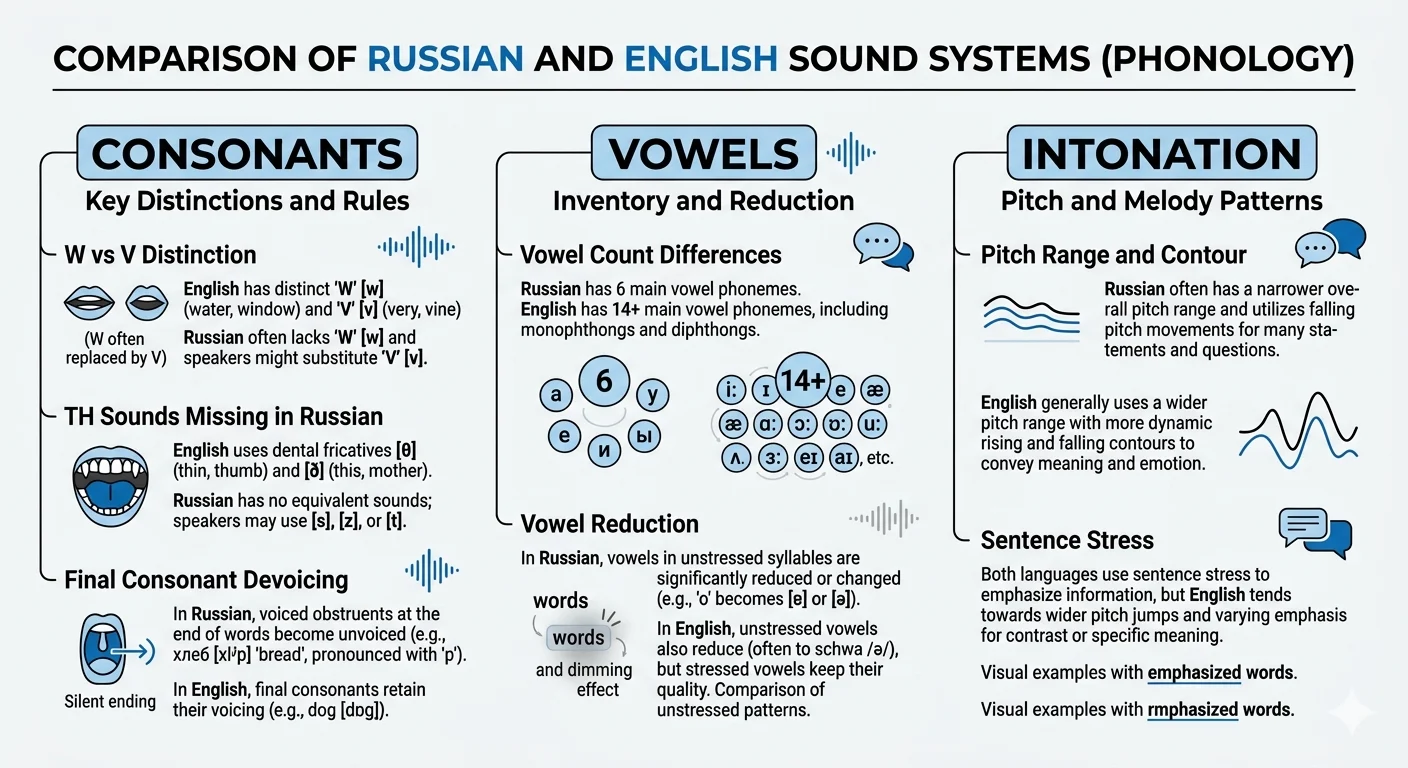
Consonant Challenges:
- Russian has no /w/ sound. The closest sound in Russian is /v/, which leads Russian speakers to replace English “w” with “v” — “wine” becomes “vine,” “water” becomes “vater”
- Russian lacks the English /θ/ and /ð/ sounds (the “th” in “think” and “this”). These are typically replaced with /t/, /d/, /s/, or /z/
- Russian /r/ is a trilled or tapped consonant, very different from the smooth, retroflex American English /r/
- Final consonant devoicing is a core rule in Russian — voiced consonants at the end of words become voiceless. So Russian speakers often say “bet” instead of “bed,” “bik” instead of “big,” “haf” instead of “have”
- The English /h/ sound is softer and more breathy than the Russian /х/ (a guttural, throat-produced sound), which can make English /h/ words sound harsher than intended
Vowel Differences:
- Russian has approximately 6 vowel sounds; English has 14 to 20 depending on dialect
- Russian lacks the English /æ/ sound (as in “cat” or “bad”), which often gets replaced with a sound closer to /ɛ/ — “cat” sounds like “ket”
- The tense/lax vowel distinction (e.g., “ship” vs. “sheep,” “full” vs. “fool”) doesn’t exist in Russian, leading to consistent confusion of these pairs
- Russian speakers often apply full vowel quality to unstressed English syllables, where native English speakers use a reduced schwa /ə/
Syllable Structure and Rhythm:
- Russian, like English, is a stress-timed language — but Russian stress placement follows different rules, and Russian speakers often misplace stress in English multi-syllable words
- Russian allows complex consonant clusters (think “здравствуйте”), but English cluster patterns are different, sometimes leading to vowel insertion or cluster simplification
Intonation:
- Russian intonation patterns differ significantly from American English — Russian statements often have a characteristic downward-then-flat pattern that can sound flat or monotone to English ears
- Question intonation in Russian also follows different curves, which can make Russian-accented English questions sound like statements
Common Patterns in Russian-Accented English
When focusing on Russian accent reduction, these are the specific patterns that most frequently affect clarity:
Consonant Substitutions
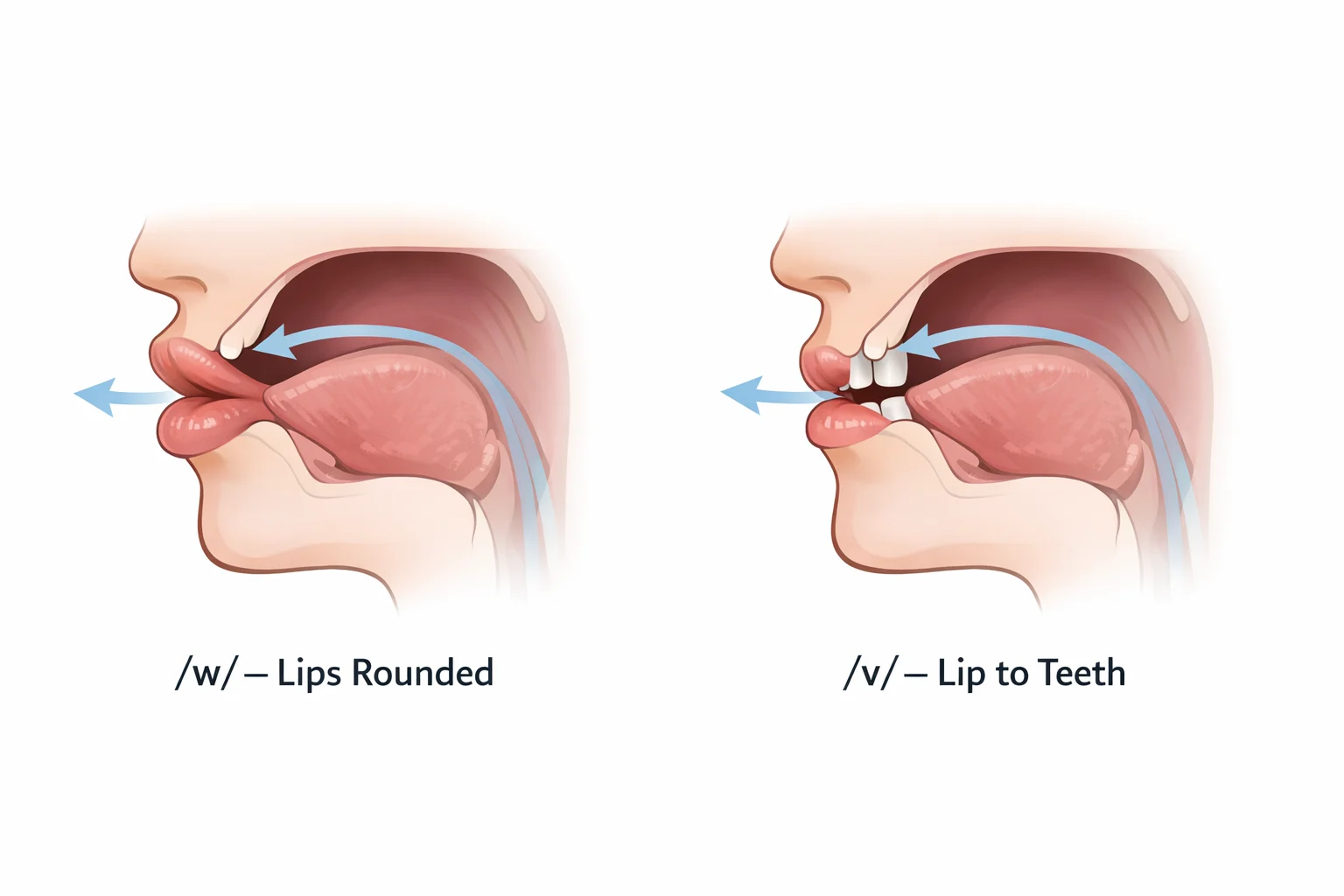
Russian pattern: “W” replaced with “v” — “window” sounds like “vindow,” “work” sounds like “vork” Clear English: Round your lips completely without letting your bottom lip touch your upper teeth
Russian pattern: “Th” replaced with “t,” “d,” “s,” or “z” — “think” sounds like “tink” or “sink,” “this” sounds like “dis” or “zis” Clear English: Place the tip of your tongue between or just behind your front teeth
Russian pattern: Trilled or rolled “r” — “right” sounds heavily rolled Clear English: Curl the tip of your tongue back slightly, without touching the roof of the mouth; the sound is produced in the throat/back of the mouth
Russian pattern: Final consonant devoicing — “bed” sounds like “bet,” “big” sounds like “bik,” “have” sounds like “haf,” “road” sounds like “roat” Clear English: Maintain full voicing through to the end of the word — the vowel before a final voiced consonant is also slightly longer
Russian pattern: Guttural “h” — “hello” sounds like “khello,” “house” sounds like “khouse” Clear English: English /h/ is a soft exhale, like fogging a mirror — no throat constriction
Vowel Substitutions
Russian pattern: /æ/ replaced with /ɛ/ — “cat” sounds like “ket,” “bad” sounds like “bed,” “man” sounds like “men” Clear English: Drop your jaw lower and push the sound slightly forward in the mouth
Russian pattern: No distinction between tense and lax vowels — “ship” and “sheep” sound the same, “full” and “fool” sound the same Clear English: Lax vowels (/ɪ/, /ʊ/) are shorter and more relaxed; tense vowels (/iː/, /uː/) are longer and more rounded
Russian pattern: Stressed vowels used in unstressed syllables — “about” pronounced with a full /a/ instead of /ə/ Clear English: Unstressed syllables use a reduced, neutral schwa — “about” is /ə-BAWT/, not /A-bout/
Stress and Intonation
Russian pattern: Stress placed on wrong syllable — “deCISion” becomes “DEcision,” “comMUNicate” becomes “COmmunicate” Clear English: English word stress must be learned word by word; a good dictionary habit helps enormously
Russian pattern: Flat or monotone delivery on statements Clear English: English statements use a falling tone on the stressed word in the final content word of the sentence, with more dynamic pitch range throughout
How to Lose Russian Accent: A Step-by-Step Method
Now that you understand the patterns, here’s the systematic approach that works.
Step 1 — Train Your Ear First
You cannot consistently produce sounds you can’t reliably hear. Most Russian speakers, at first, can’t detect the difference between their “w” and “v,” or between “bed” and “bet” as they produce them. The ear has to come first.
Daily listening exercises:
- Listen to minimal pairs (words differing by one sound): “wine/vine,” “think/tink,” “bed/bet,” “cat/cot,” “ship/sheep”
- Pay attention to sentence-level stress and intonation — notice which words get emphasized and how pitch moves
- Watch American English speakers closely, paying attention to what their mouth and jaw are doing
- Choose one 30 to 60 second audio clip and listen to it 5 to 10 times, catching more detail each time
Spend at least 15 minutes daily on focused listening before moving into production practice.
Step 2 — Shadow Native Speech
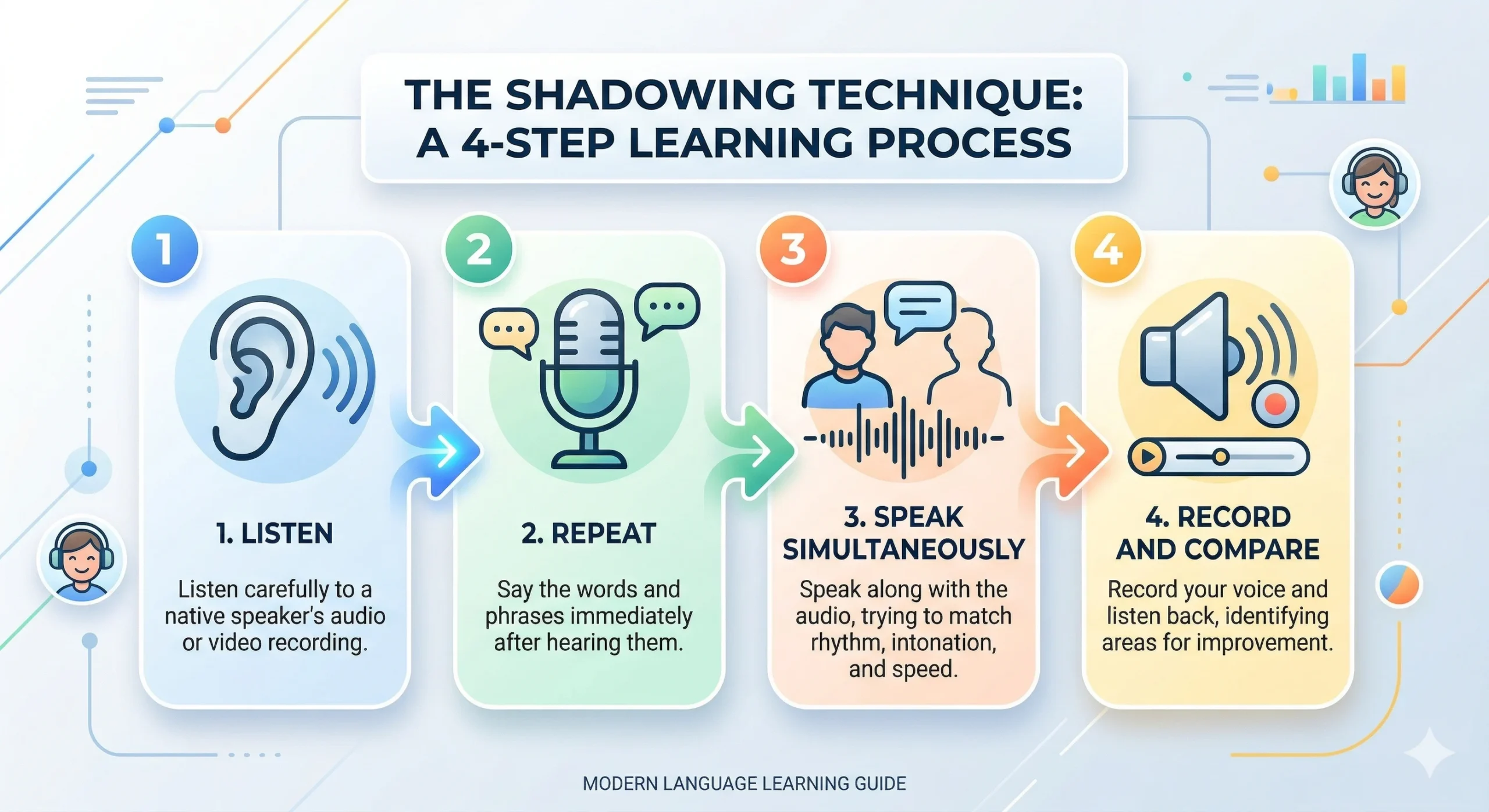
Shadowing is one of the most powerful tools for accent modification. Here’s the method:
- Choose a short audio clip (30 to 60 seconds) of a native American English speaker — a podcast, TED Talk, or film scene works well
- Listen once for meaning
- Play it again, repeating each phrase immediately after you hear it
- Gradually close the gap until you’re speaking almost simultaneously with the recording
- Record yourself and compare directly to the original
Shadowing trains not just individual sounds but the overall rhythm, flow, and intonation of English — the elements that make speech sound natural rather than textbook.
Step 3 — Target Your Specific Problem Sounds
This is where the real work happens. Focus on one sound at a time until it becomes automatic, then move to the next.
For the /w/ sound (replacing the Russian /v/ habit):
- Round your lips into a tight circle — like you’re about to whistle
- Do not let your bottom lip touch your upper teeth (that’s “v,” not “w”)
- Relax your lip rounding as you move into the vowel
- Practice: “water,” “word,” “would,” “always,” “away,” “everywhere”
- Minimal pair drill: “wine/vine,” “west/vest,” “wet/vet,” “worse/verse”
For the /θ/ and /ð/ sounds (replacing “tink” and “dis”):
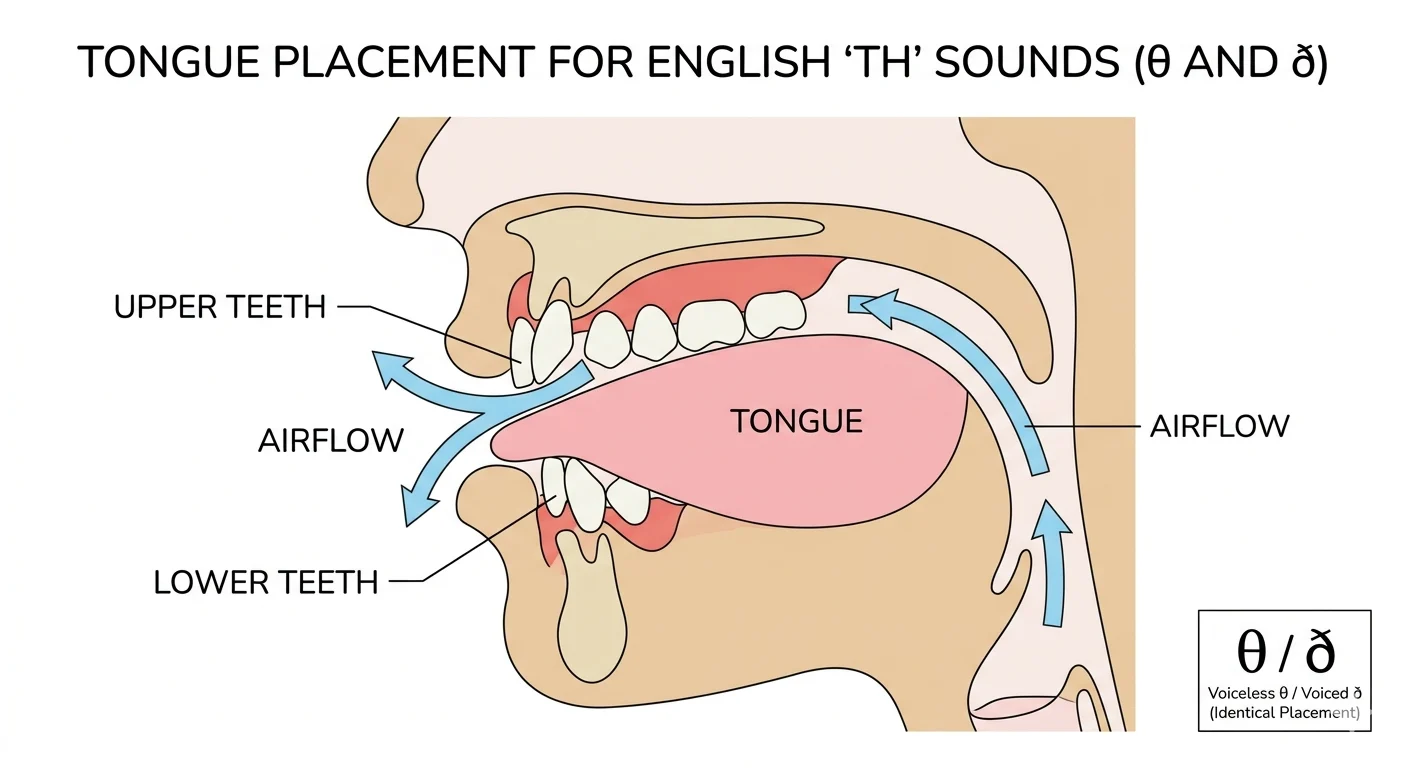
- Place the tip of your tongue between your front teeth — or just behind the top teeth
- For unvoiced “th” (think, thank, through): blow a gentle stream of air over your tongue
- For voiced “th” (this, that, the, them): same position, but add voice
- Practice: “think,” “thanks,” “three,” “both,” “this,” “that,” “the,” “together”
- The tongue-between-teeth position feels strange at first. That’s normal. It becomes automatic within a few weeks.
For the American English /r/:
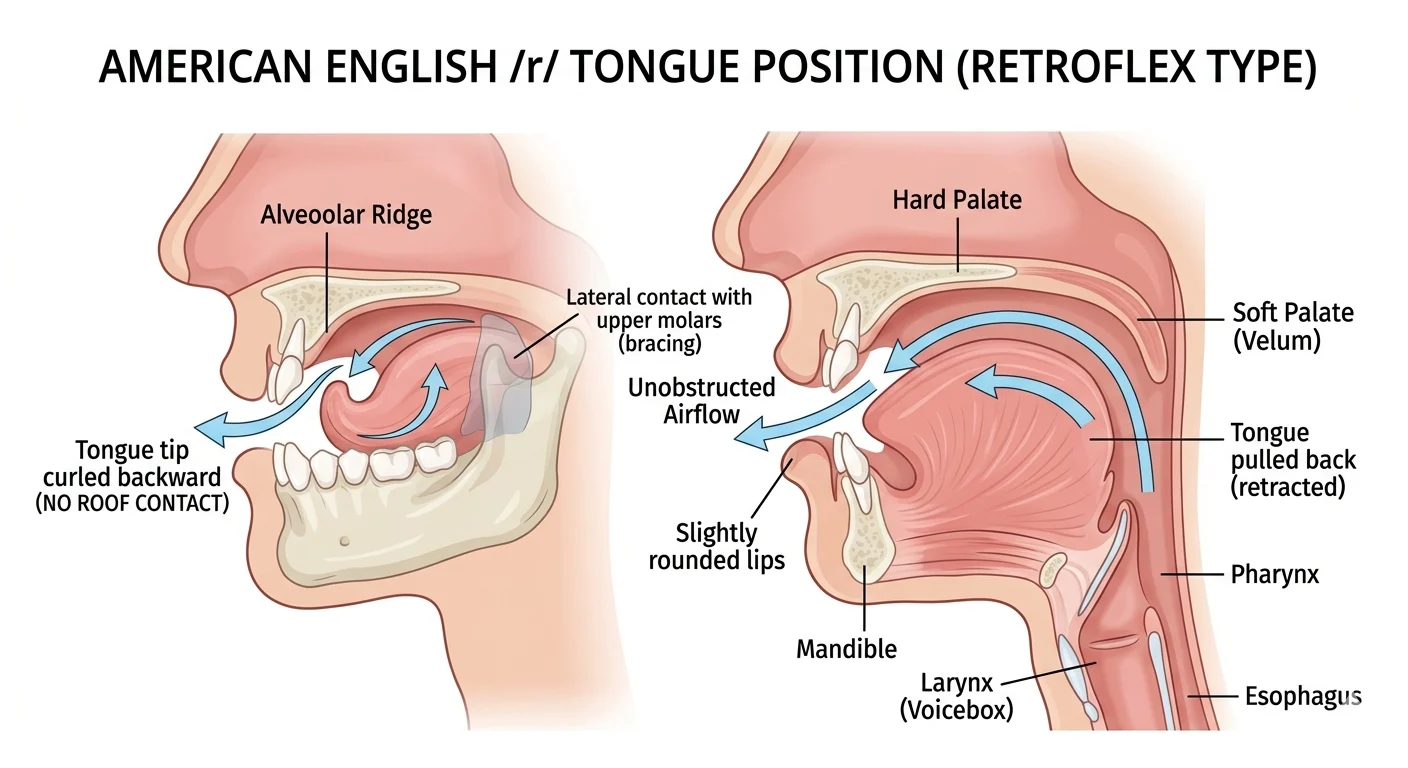
- Don’t trill. Don’t tap. Pull the tip of your tongue backward and upward without touching the roof of your mouth
- The sides of the tongue touch the upper back teeth slightly
- It’s a smooth, almost liquid sound, produced continuously
- Practice: “right,” “red,” “road,” “sorry,” “work,” “first,” “her”
- Start slowly in individual words before moving to connected speech
For final consonant voicing (fixing devoicing):
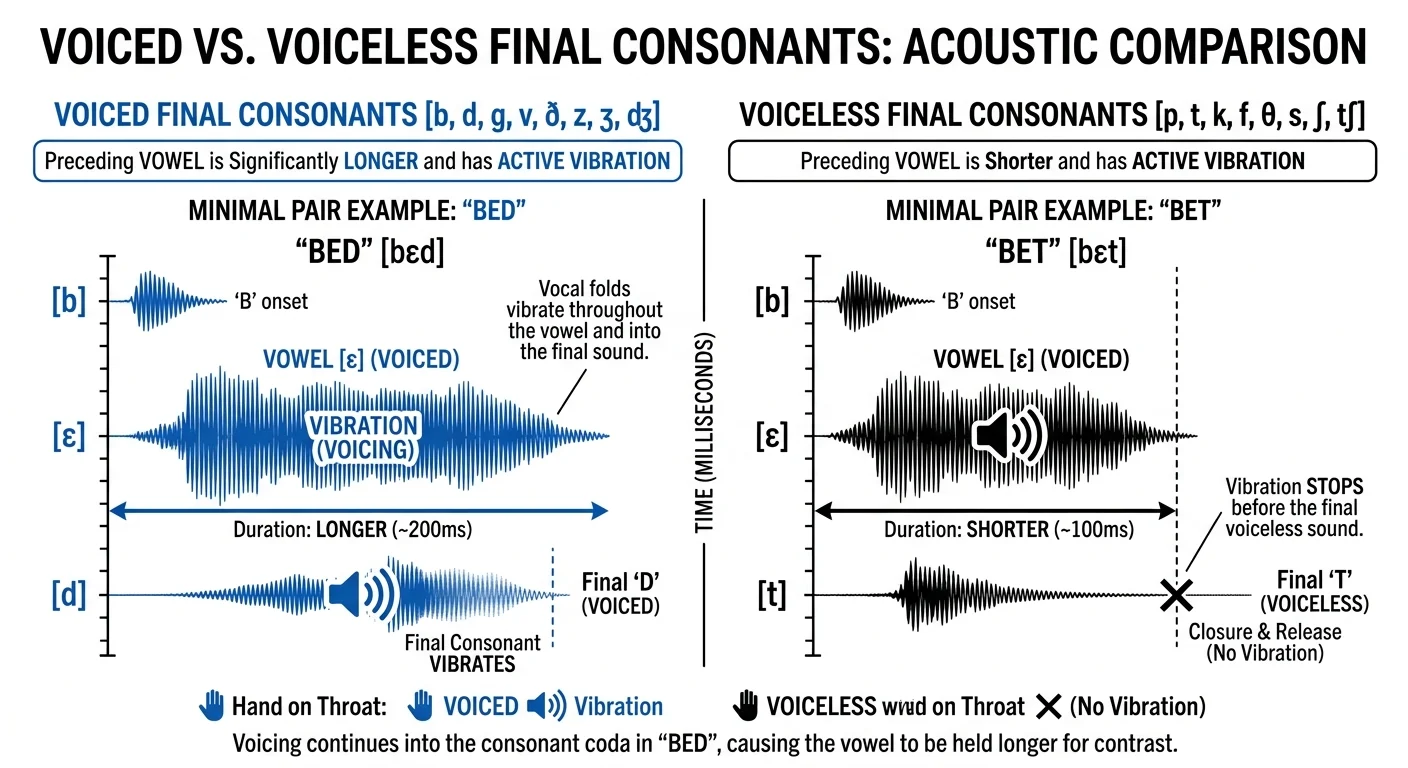
- This is one of the most important changes for Russian speakers
- Think of voiced final consonants (/b/, /d/, /g/, /v/, /z/) as requiring you to keep the “buzz” going through the last sound
- A useful trick: the vowel before a voiced final consonant is slightly longer than before a voiceless one — “bad” has a longer vowel than “bat”
- Practice pairs: “bed/bet,” “bag/back,” “have/half,” “lives/life,” “dogs/docks”
- Record yourself on these pairs and listen critically
For the /æ/ vowel (cat, bad, man):
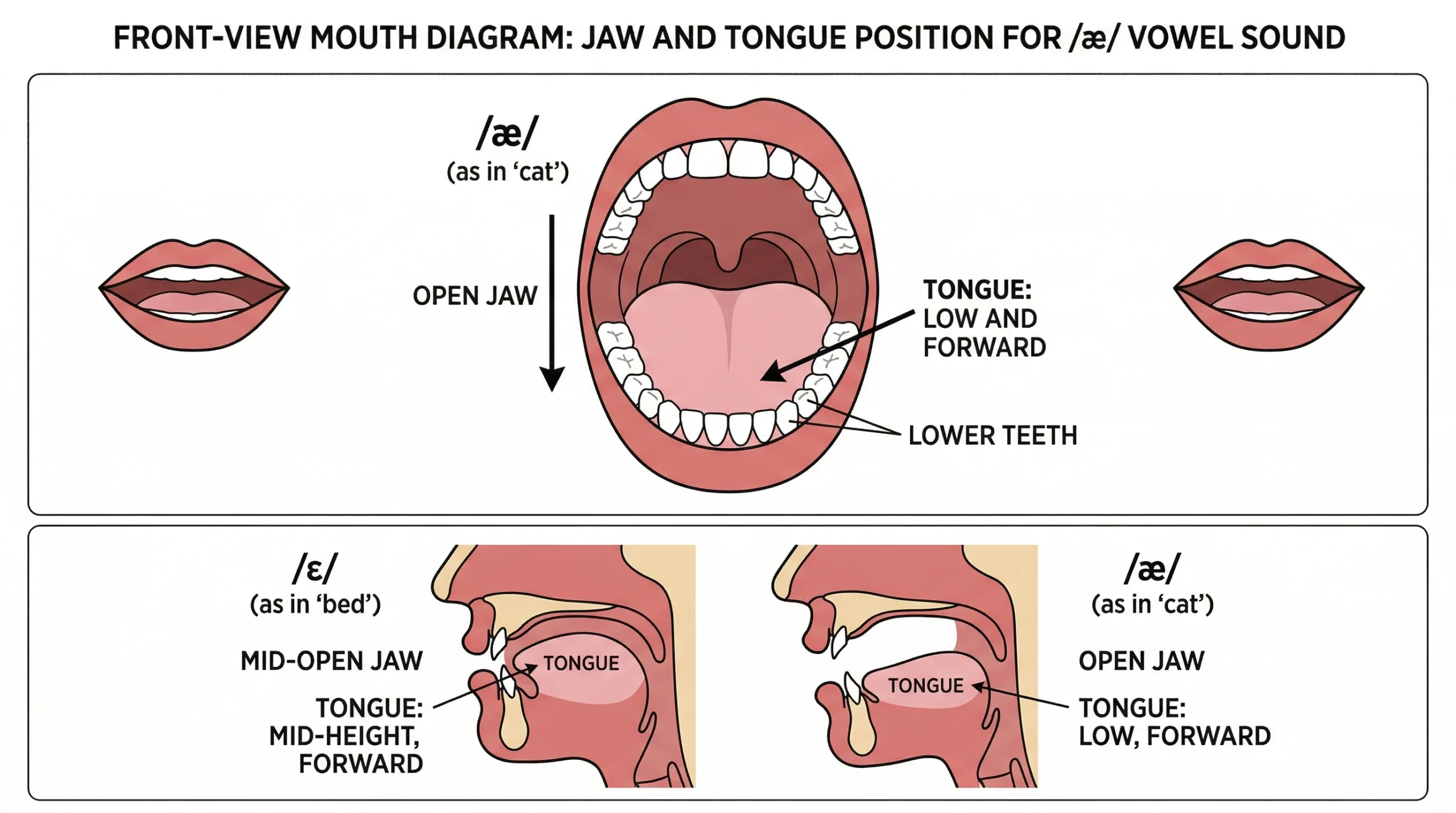
- Open your jaw wider than feels natural
- Push the sound slightly forward — as if the vowel is coming from the front of your mouth
- Your tongue is low and slightly forward
- Practice: “cat,” “bad,” “man,” “have,” “that,” “and,” “back,” “pass”
- Minimal pairs: “cat/cot,” “bad/bed,” “man/men,” “bat/bet”
For the /h/ sound:
- Relax your throat completely — no constriction
- It’s just a soft exhale before the vowel — like fogging a mirror with your mouth
- Practice: “hello,” “hand,” “hair,” “ahead,” “behind,” “who,” “how”
Step 4 — Record, Reflect, Repeat
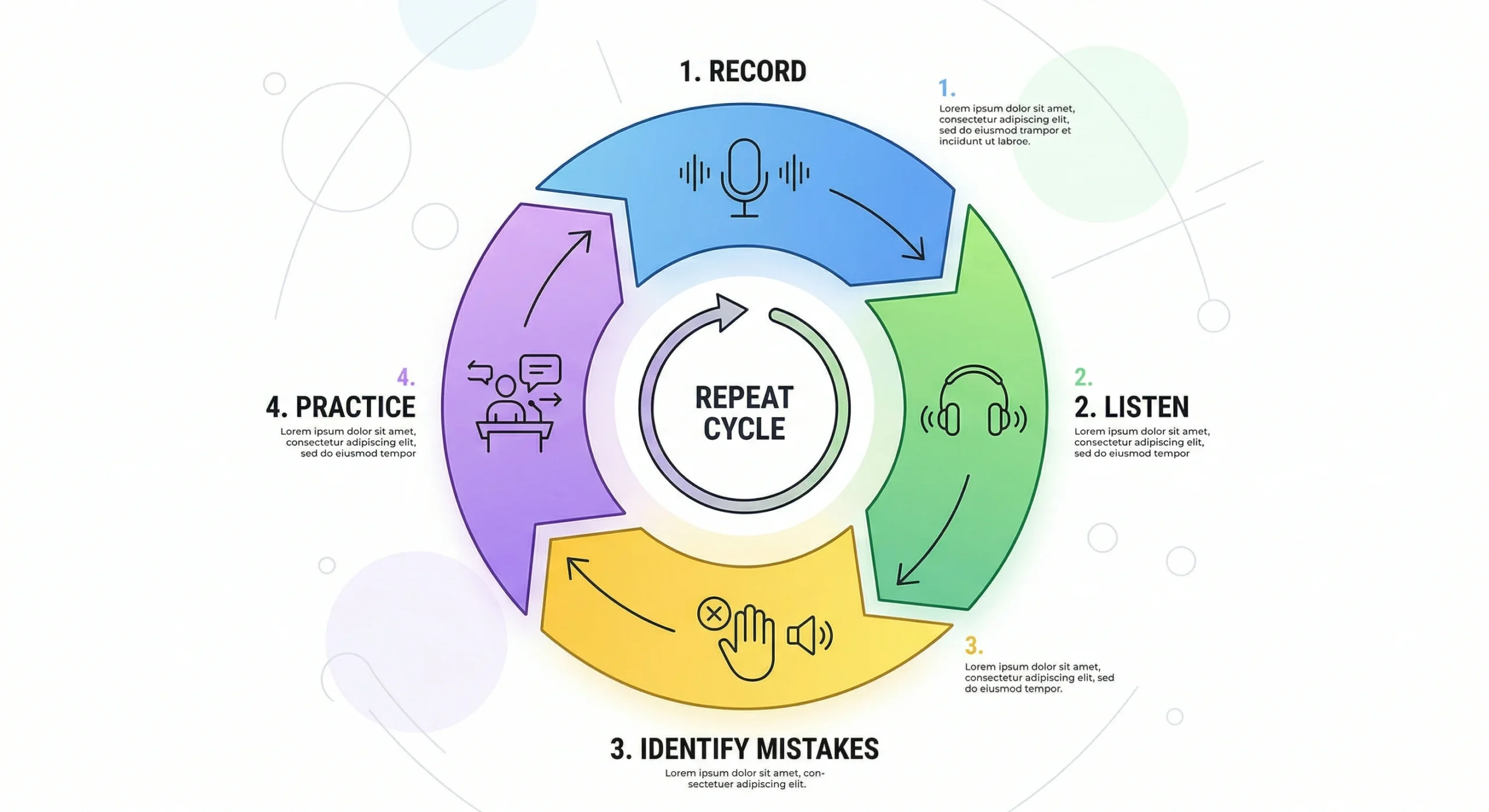
Regular self-recording is non-negotiable. Here’s the cycle:
- Choose a paragraph or topic to speak about for 1 to 2 minutes
- Record yourself without preparing or scripting — natural speech reveals your real patterns
- Listen back critically, noting where your target sounds still slip back to Russian patterns
- Drill those specific sounds for 5 to 10 minutes
- Record again and compare
Most people underestimate how much progress they make in 30 days of this cycle. The recording is your feedback loop. Use it.
Common Russian Accent Examples (And How to Fix Them)
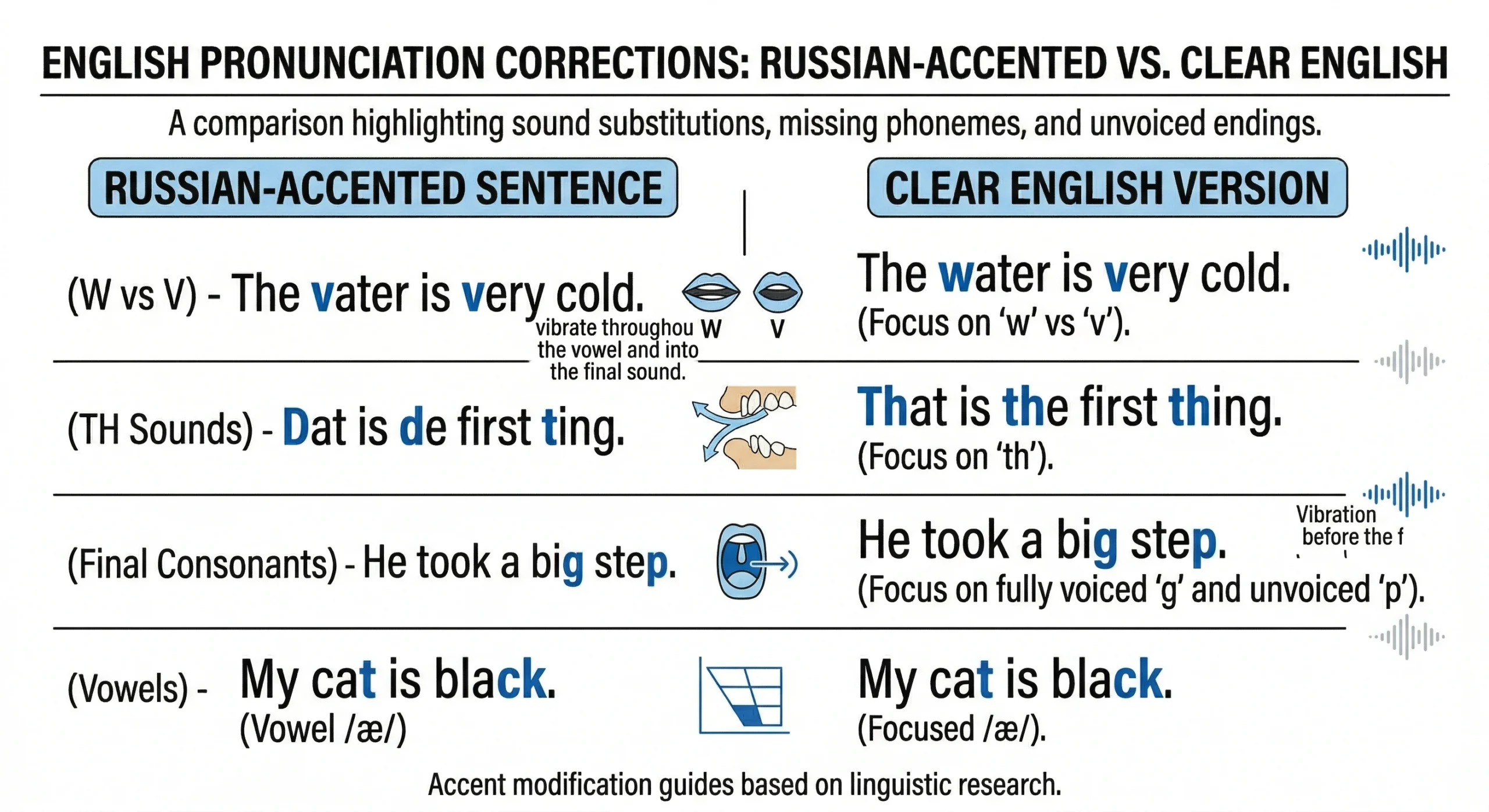
Here are typical sentences showing how Russian accent patterns affect clarity, alongside their clearer alternatives:
Russian accent: “I sink ve should discuss ze project tomorrow.” Clear English: “I think we should discuss the project tomorrow.” (th → think, w → we, z → the)
Russian accent: “Let me know vat you vant to do about dis.” Clear English: “Let me know what you want to do about this.” (v → w, d → th)
Russian accent: “He hes a very goood ket at home.” Clear English: “He has a very good cat at home.” (vowel quality on “has” and “cat,” final consonant on “good”)
Russian accent: “Ve worked very herd on zis proposal.” Clear English: “We worked very hard on this proposal.” (w → we, vowel in “hard,” z → this)
Russian accent: “I reed the reporrt and it look goood.” Clear English: “I read the report and it looks good.” (r quality, final consonant voicing)
By targeting the specific patterns in these examples, you’ll make rapid, noticeable progress in your Russian accent reduction work.
How Long Does It Take to Lose a Russian Accent?
The timeline varies by individual, but here’s what most of my Russian-speaking clients experience with consistent daily practice:
- First noticeable improvements: 3 to 4 weeks — individual target sounds become more reliable, especially /w/ and /th/
- Significant reduction in communication barriers: 2 to 3 months — colleagues stop asking you to repeat yourself as often; you feel more confident in real-time conversation
- Comfortable, natural-sounding speech: 4 to 6 months — new patterns feel automatic rather than effortful; you’re no longer consciously monitoring every sound
The biggest factor isn’t talent — it’s consistency. Twenty minutes of focused daily practice beats a two-hour weekly session every time. The brain forms new motor patterns through repetition, not through duration.
Benefits of Accent Reduction for Russian Speakers
The benefits go beyond just being understood more easily.
Professional credibility: In English-speaking workplaces, communication clarity directly affects how your ideas are received. When your pronunciation is clean, your expertise reads as expertise — rather than getting filtered through listener effort.
Career advancement: Many of my clients report that after working on their accent, they started speaking up more in meetings, volunteering for presentations, and pursuing opportunities they previously avoided. Confidence in your voice opens doors.
Daily confidence: The psychological weight of constantly worrying whether you’ll be understood is exhausting. As your clarity improves, so does your willingness to engage — in negotiations, in networking, in casual conversation. That shift compounds over time.
Better listening: Ironically, working on accent reduction also improves your listening comprehension. As you train your ear to hear subtle English distinctions, native speech becomes easier to follow at full speed.
Resources and Tools for Russian Speakers
These are tools I recommend to my clients for self-study practice:
Apps:
- ELSA Speak — AI pronunciation coaching with instant feedback on individual sounds; particularly good for drilling specific phonemes
- Speechling — lets you record and compare your pronunciation against native speaker models
- Forvo — native speaker audio for virtually any English word, useful for checking pronunciation quickly
YouTube:
- Search for “American English pronunciation” channels — Rachel’s English and Sounds American are two that consistently come up with my clients as genuinely useful
- Watch American interview formats (podcasts, late-night shows, TED Talks) for natural connected speech
Podcasts:
- Any slowly-paced American English podcast works well for shadowing practice — NPR and Freakonomics Radio are good starting points
- The key is choosing content you’ll actually listen to repeatedly, because repetition is what builds the ear
Books:
- American Accent Training by Ann Cook remains a solid resource for systematic sound-by-sound work
- Mastering the American Accent by Lisa Mojsin includes audio and is particularly well-structured for self-study
Frequently Asked Questions
Is it too late to lose a Russian accent as an adult?
No. Adults actually have one advantage over children: you can understand why you’re making a change, which speeds up the process. The brain retains plasticity for new motor patterns well into adulthood. The key variables are consistency, targeted practice, and quality feedback — not age.
Why do Russian speakers have trouble with “w” specifically?
Because /w/ simply doesn’t exist in Russian. The Russian alphabet and sound system use /v/ as its closest neighbor, so when Russian speakers encounter “w” in English, the brain automatically maps it to the nearest familiar sound: /v/. It’s not a mistake — it’s the brain doing exactly what it’s designed to do. The fix is conscious retraining of the lip position until the new pattern becomes automatic.
Does final consonant devoicing really matter that much?
Yes — it’s one of the most noticeable Russian accent markers in English, and it can cause genuine miscommunication. When “bed” sounds like “bet,” “bag” sounds like “back,” and “leave” sounds like “leaf,” listeners are doing extra decoding work on every sentence. Fixing final devoicing is high-leverage: one change that improves clarity across hundreds of words simultaneously.
Can I reduce my accent without a coach?
You can make meaningful progress with consistent self-study. The tools and techniques in this guide are genuinely effective. That said, a coach provides something self-study cannot: accurate, real-time feedback on what you specifically are doing wrong. Most people have blind spots they can’t hear themselves. A good accent coach identifies those blind spots and accelerates the process significantly.
How is accent reduction different from learning English pronunciation?
Accent reduction is specifically about modifying learned pronunciation habits — patterns you’ve already internalized. It’s not about grammar or vocabulary. You’re working at the level of muscle memory: retraining the tongue, lips, jaw, and airflow to produce sounds that don’t exist in your native language. It’s a physical skill, not an academic one.
Conclusion: Start Where You Are

If you’ve been wondering how to lose your Russian accent, the most important thing to understand is this: the patterns are predictable, the techniques are proven, and the timeline is shorter than most people expect.
Start with your ear. Then target your highest-impact sounds: /w/, final consonant voicing, /th/, and the American /r/. Record yourself, listen back, and drill the gaps. Twenty minutes a day, every day, will get you further than anything else.
Accent modification is a skill, not an overnight transformation — but with consistent practice, you can dramatically improve your clarity while keeping your authentic voice.
At Intonetic, there are two ways to get started depending on how you prefer to learn.
If you want to work on your own schedule, the American Accent Training program gives you a structured, 10-minute daily system built around the exact sounds and rhythm patterns covered in this guide. Self-paced, cancel any time.
If you’d prefer personalized guidance — a coach who identifies exactly what’s holding you back and corrects it in real time — the 1-on-1 coaching program is the faster, more direct route. You can start with a free accent assessment to see what it looks like.